

China’s fan motor industry has become a practical sourcing base for ventilation, HVAC, refrigeration, appliances, and industrial equipment. This guide reviews China’s top 10 Fan Motor manufacturers for global buyers, focusing on engineering capability, product consistency, export experience, and application fit.
The International Energy Agency reported that electric motor systems consume more than half of the world’s electricity. Small efficiency gains can therefore reduce operating costs across thousands of installed units. This matters in real settings, such as a rooftop HVAC unit running continuously or a refrigeration cabinet operating inside a busy supermarket. Buyers should examine motor efficiency, airflow performance, noise levels, thermal protection, bearing quality, and expected service life. IEC 60034-30-1 also provides an important reference for motor efficiency classifications, although not every fan motor follows the same testing path.
This list does not treat factory size as the only measure of quality. Some manufacturers specialize in compact shaded-pole motors, while others focus on BLDC, EC, or high-pressure centrifugal fan motors. Voltage options, frequency compatibility, IP protection, insulation class, and customized mounting dimensions can change the purchasing decision. Certifications and test documents deserve careful verification.
No ranking is perfect. A supplier may perform well in samples but struggle with delivery consistency. That risk is easy to underestimate. The following selection combines public company information, technical documentation, market reputation, and buyer-oriented evaluation points. Global purchasers should still request recent test reports, production samples, audit records, and warranty terms before approving a long-term supply agreement.
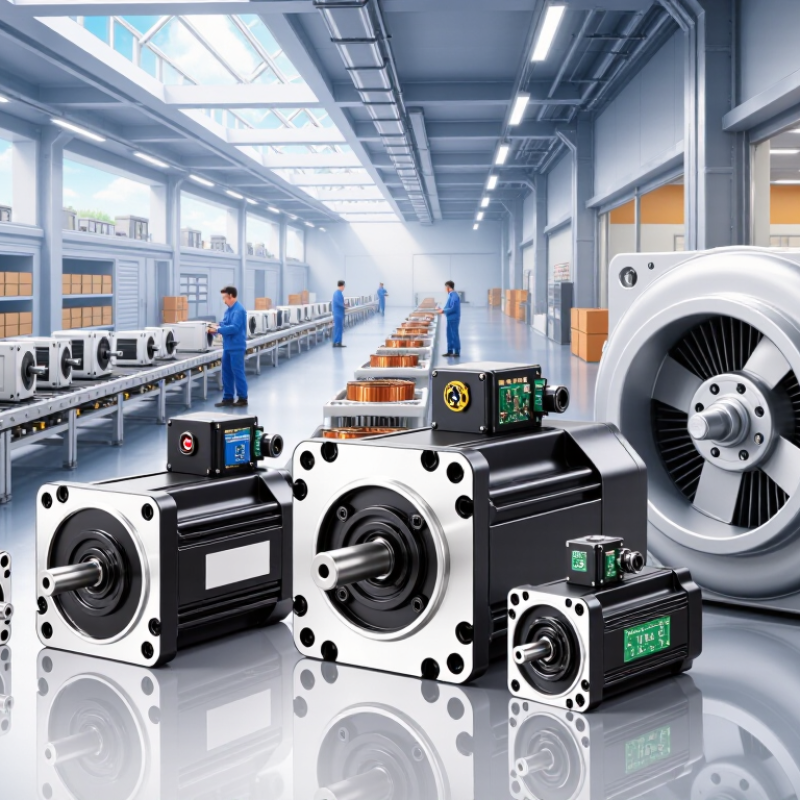
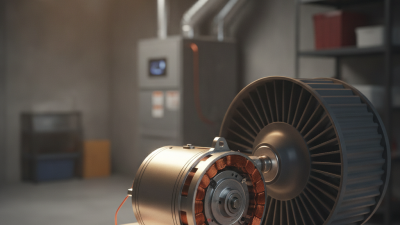
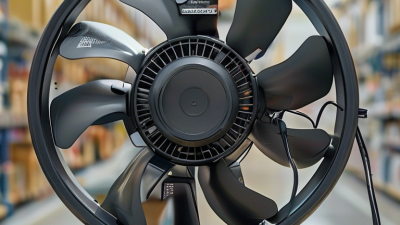
A fan motor converts electrical energy into rotational force, driving the blades that move air. Common designs include shaded-pole, permanent-split capacitor, brushless DC, and electronically commutated motors. Each suits different conditions. A small shaded-pole motor may serve a compact exhaust fan, while a brushless motor can reduce energy use and operating noise.
Motor performance depends on more than rated wattage. Buyers should check voltage, frequency, speed, torque, insulation class, bearing design, airflow direction, and expected service life. In practical supplier evaluations, temperature-rise tests and vibration readings reveal problems that product sheets often hide. A motor that runs smoothly in a showroom may struggle inside a hot, dusty enclosure. That detail matters.
China has become a major global supplier because its manufacturing network connects copper winding, stamped steel, magnets, bearings, controllers, tooling, and final assembly. This concentration can shorten lead times and support customized shafts, mounting holes, connectors, and voltage ranges. Export-oriented factories also commonly provide sampling, production testing, traceability records, and packaging suited to long-distance transport. However, quality varies between suppliers, even when specifications look identical. The lowest quotation can conceal weaker bearings, inconsistent winding insulation, or limited testing equipment. The gap remains. Buyers should verify samples, inspect process controls, review test data, and confirm how defects are handled before placing volume orders.
Fan motors convert electrical energy into airflow. The chart compares representative input-power ranges across common fan applications, helping global buyers evaluate motor specifications, efficiency requirements, and suitable manufacturing capabilities.
Data shown are representative commercial ranges based on commonly published fan specifications and standard motor application practice. Actual power ratings vary by airflow, static pressure, voltage, speed, motor design, and regional requirements.
China Top 10 Fan Motor Manufacturers for Global Buyers
Identifying China’s top ten fan motor manufacturers requires more than comparing online rankings. Global buyers should examine production evidence, test records, and export reliability. The International Energy Agency reports that electric motor systems consume a substantial share of global electricity. Efficiency is therefore a purchasing issue, not merely a technical detail. Ask for rated efficiency, power-factor data, temperature-rise results, and noise measurements under comparable conditions.
A credible supplier should provide traceable samples, controlled winding processes, and documented final inspection. Check whether its quality system follows ISO 9001 and whether products hold applicable CCC, CE, or other market certifications. Independent laboratory reports are stronger than factory brochures. Look for endurance testing, vibration control, bearing-life records, and protection ratings. The U.S. Department of Energy also highlights motor-system efficiency as an important industrial energy-saving opportunity.
Export history matters. Review customs records, shipment consistency, destination markets, and after-sales response times. Request two recent customer references, preferably for similar fan applications. A polished factory tour can still mislead. I would not trust one audit alone. Compare at least three production batches and inspect rejected units. Some manufacturers disclose little about failure rates, which deserves attention. A practical scoring model can weight efficiency and reliability at 40%, manufacturing capability at 25%, compliance at 20%, and service at 15%. The percentages are not universal, but they make supplier selection less subjective.
| No. | Evaluation Dimension | Verified Benchmark | Documents or Data to Request | Warning Signs |
|---|---|---|---|---|
| 01 | Legal Manufacturing Status | The supplier should have an active business registration, a clearly stated manufacturing scope, and a physical production address in China. | Business license copy, unified social credit code, factory address, ownership of production equipment, and recent factory photographs or video verification. | Only a trading-company address is provided, the registered scope does not cover motor manufacturing, or the factory location cannot be verified. |
| 02 | Quality Management System | ISO 9001 certification is a useful baseline for documented purchasing, production, inspection, corrective-action, and traceability procedures. | Current ISO 9001 certificate, certification-body details, certificate scope, internal inspection procedures, and sample quality records. | An expired certificate, a scope unrelated to motors, inconsistent certificate details, or no documented corrective-action process. |
| 03 | Product Safety Compliance | The motor design should be evaluated against the requirements applicable to the finished fan and target market, including electrical insulation, temperature rise, abnormal operation, and mechanical safety. | Applicable safety test reports, insulation-system information, dielectric-strength test records, thermal-protection details, and destination-market compliance files. | Generic certificates are supplied without model numbers, ratings, test standards, or a clear connection to the proposed motor. |
| 04 | Electrical Compatibility | Rated voltage, frequency, phase, current, speed, power, insulation class, and rotation direction must match the end application. Common commercial requirements include 50 Hz or 60 Hz operation and market-specific voltage systems. | Complete datasheet, winding specification, no-load and rated-load test results, locked-rotor data where relevant, and confirmation of 50/60 Hz performance. | Only wattage is stated; voltage, current, speed tolerance, insulation class, or duty cycle is missing. |
| 05 | Motor Construction and Materials | The supplier should identify the motor type and critical construction details, such as shaded-pole, PSC, BLDC, capacitor-run, bearing system, winding wire, rotor balance, and thermal protection. | Bill of materials, cross-sectional drawings, copper or aluminum winding declaration, bearing specification, capacitor rating, thermal protector model, and material certificates when required. | Material substitutions are allowed without approval, bearing origin is unclear, or the supplier refuses to disclose key construction parameters. |
| 06 | Production and Capacity Control | A qualified factory should demonstrate controlled assembly, winding, balancing, impregnation, aging, and final-inspection processes with capacity aligned to the buyer’s forecast. | Production-line photographs, process flow chart, monthly capacity statement, equipment list, production lead time, bottleneck analysis, and capacity-reservation policy. | Capacity figures are presented without production records, lead times change frequently, or subcontracting is undisclosed. |
| 07 | Testing and Traceability | Routine testing should cover electrical safety and performance characteristics appropriate to the motor, with batch-level traceability from incoming materials to shipment. | Test-equipment list, calibration certificates, routine-test checklist, sample test reports, serial or batch-number rules, and retention period for quality records. | Testing is described only as visual inspection, calibration records are unavailable, or finished products cannot be traced to a production batch. |
| 08 | Efficiency, Noise, and Reliability Data | Performance should be compared using consistent test conditions. Important indicators include input power, airflow or fan-system performance, sound level, vibration, temperature rise, bearing life, and endurance results. | Standardized performance curves, sound-pressure test conditions, vibration measurements, endurance-test duration, temperature-rise data, and failure-analysis reports. | Noise or efficiency values are quoted without test distance, system configuration, operating point, ambient temperature, or measurement method. |
| 09 | Export and Packaging Capability | The supplier should be able to prepare accurate commercial documents, export packaging, product labels, customs information, and destination-market documentation. | Sample commercial invoice, packing list, HS-code proposal, carton specification, palletization plan, export packaging photos, and shipping damage-control procedure. | Product labels do not match shipping documents, packaging is not tested for transport, or export responsibilities are unclear. |
| 10 | After-Sales and Corrective-Action Support | A reliable supplier should define warranty coverage, response time, spare-parts responsibility, complaint handling, root-cause analysis, and corrective-action deadlines. | Written warranty terms, service-level expectations, replacement policy, 8D or root-cause-analysis template, spare-parts list, and escalation contacts. | Warranty exclusions are broad, response times are not defined, or the supplier offers replacement only without failure analysis. |
China’s top ten fan motor manufacturers serve a wide range of global equipment buyers. Their product portfolios commonly include shaded-pole motors, capacitor motors, EC motors, and brushless DC designs. Some suppliers also produce customized stators, rotors, and complete fan assemblies. The right choice depends on airflow, voltage, noise limits, duty cycle, and installation space. Small details matter. An axial fan motor may suit refrigeration cabinets, while a centrifugal design supports air curtains and compact ventilation units.
In industrial cooling, buyers often need continuous operation, stable thermal performance, and protection against dust or moisture. Household appliances usually prioritize low vibration, quiet starting, and affordable replacement access. EC and BLDC motors can reduce energy consumption through variable-speed control, especially in HVAC systems and data-room cooling. However, efficiency claims need test conditions. Ask for rated curves, temperature-rise data, insulation class, bearing life, and sample test records. This separates useful specifications from polished sales language.
Key manufacturer strengths include in-house tooling, automated winding lines, balanced rotor testing, and dependable quality control. Export-ready suppliers should explain material traceability, inspection frequency, packaging protection, and after-sales response times. A factory audit can reveal practical issues, such as inconsistent connector crimping or weak carton design. These problems are not dramatic, but they become expensive after shipment. I would also compare pilot samples with mass-production units. They are not always identical. That gap deserves attention before a long-term order.
For global buyers, a strong fan motor manufacturer should provide more than attractive pricing. ISO 9001 certification indicates controlled processes, but it does not guarantee every motor performs perfectly. Request recent audit records, inspection plans, and batch-level traceability. Check whether testing covers voltage stability, temperature rise, vibration, noise, and continuous operation. Small details matter.
Certifications must match the destination market and product application. CE may support European sales, while other regions require different safety approvals. RoHS documentation helps verify restricted substance compliance. Ask for current certificates, test reports, and the exact model numbers covered. Certificates can expire. This is often overlooked.
Production capability also separates serious suppliers from trading companies. Look for automated winding lines, rotor balancing equipment, calibrated electrical testers, and end-of-line inspection. A reliable factory should explain its monthly capacity without vague promises. Confirm how it manages samples, engineering changes, spare parts, and urgent reorders. During supplier visits, examine finished motors, rejected units, packaging areas, and maintenance records. I have found that clean workshops can still hide weak documentation. That deserves honest review. A practical evaluation should include sample testing, a remote factory audit, and a small trial order before scaling production. Ask for performance curves at different loads, not only a single rated value. Record these findings in a clear supplier scorecard.
When global buyers review China’s top ten fan motor manufacturers, a ranking is only a starting point. Compare suppliers using the same technical brief. Check rated voltage, airflow, speed, noise, insulation class, bearing type, and operating temperature. Request datasheets, test reports, sample units, and factory details. A polished website proves little. Clear technical replies matter more.
Tips: Build a comparison sheet. Ask every supplier identical questions. Record response time, sample cost, minimum order quantity, lead time, warranty terms, and export experience. Check whether the quoted motor matches your actual load and installation space. Small differences in shaft size or connector position can create expensive redesigns. Do not skip sample testing.
Place orders with a signed purchase contract and approved drawings. Include material requirements, tolerances, labeling, packaging, inspection standards, and delivery terms. A pilot order is safer than immediate mass production. Use an independent inspection when the order value justifies it. Confirm payment milestones and change-control procedures in writing. Do not rely on verbal promises.
A practical weakness remains. No comparison sheet is perfect. Freight rates, exchange rates, and production schedules can change after quotation. Leave reasonable time for testing and customs clearance. Keep communication records, especially when specifications are revised. Before shipment, verify quantities, carton strength, motor rotation, and electrical performance against the approved sample.