Leave Your Message

Top Fan Motor Types for Global Buyers?

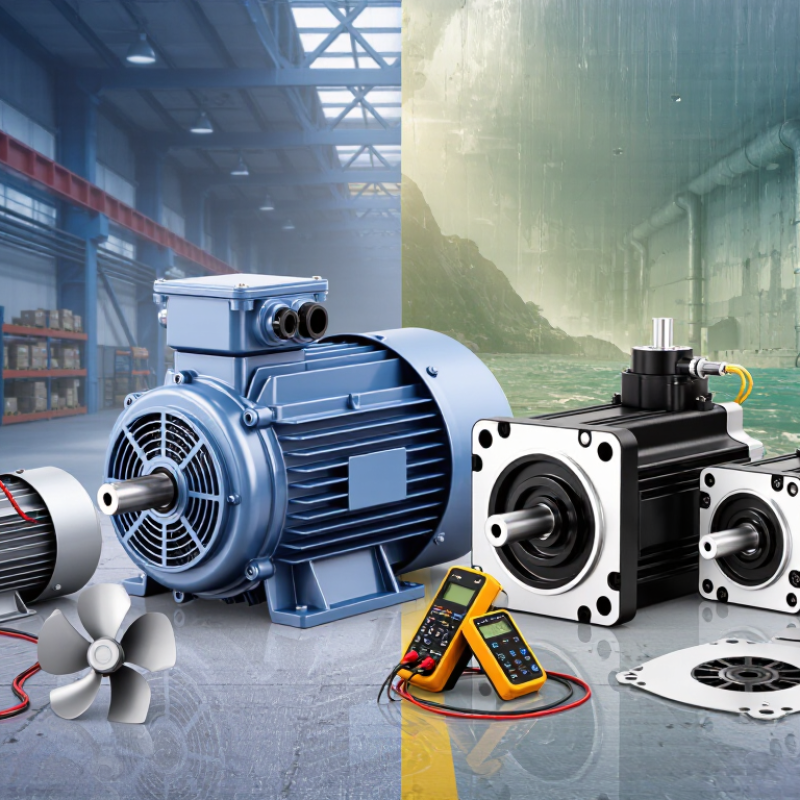
Choosing the right Fan Motor can influence airflow, noise, energy use, and product lifespan. Global buyers must look beyond purchase price. A motor that performs well in a warehouse may struggle in a humid coastal factory. Installation conditions matter.

This guide examines common motor types, including AC induction, shaded-pole, permanent-magnet, brushless DC, and electronically commutated motors. Each option has practical strengths. AC induction motors suit many industrial fans and offer familiar maintenance procedures. Shaded-pole motors remain useful in compact, low-cost equipment. Brushless DC and EC motors often provide efficient speed control and quieter operation.

However, no motor type fits every market. Power frequency, voltage range, ambient temperature, airflow pressure, and control requirements can change the final choice. A buyer should request performance curves, insulation details, bearing information, and verified efficiency data. Samples should run under realistic loads, not only in showroom conditions. Small details matter. A warm motor housing may reveal future problems.

Supplier experience also deserves careful review. Ask for test reports, production records, warranty terms, and evidence of consistent quality. Regional certifications may affect import decisions and installation approval. Requirements differ across countries, so technical documents must be checked locally. This article offers a practical comparison, but it cannot replace application testing. Some recommendations may appear obvious, yet real projects often expose overlooked constraints. Careful selection remains more valuable than a fast purchase.

Top Fan Motor Types for Global Buyers?

What a Fan Motor Does and Why Motor Type Matters

Top Fan Motor Types for Global Buyers?

What a Fan Motor Does and Why Motor Type Matters

A fan motor converts electrical energy into torque, turning the blades that move air. Its design affects airflow, noise, energy use, heat, and service life. A motor is not merely a hidden component. It controls how the fan feels in a real room.

Shaded-pole motors suit small, low-cost fans and simple ventilation units. They are compact, but their efficiency is limited. Capacitor-run induction motors provide steady operation for many household and industrial fans. They often tolerate continuous use well, although their speed control may be less flexible. Brushless DC motors use electronic commutation and can deliver efficient, quiet performance. They are useful where low energy consumption and variable speed matter. Universal motors can reach high speeds, but brush wear and operating noise require closer attention.

The best choice depends on the application, not a general ranking. Check the local voltage, frequency, duty cycle, ambient temperature, and required airflow. A buyer should also review start-up behavior and controller compatibility. Small details matter.

In field evaluations, a quiet motor can still disappoint if the blade is poorly balanced. I have also seen efficient motors lose their advantage when controls consume excess power. No motor type is perfect. Reliable selection combines test data, safety compliance, replacement access, and realistic maintenance planning. 马会

How AC, DC, and EC Fan Motors Work

Top Fan Motor Types for Global Buyers?

How AC, DC, and EC Fan Motors Work

AC fan motors use alternating current to create a rotating magnetic field. In many designs, an induction rotor follows that field without electronic control. They are simple, familiar, and often economical for fixed-speed ventilation. However, speed control can be limited, especially when low airflow is required. Frequency, voltage, and local electrical standards also need careful checking.

DC fan motors first convert incoming AC power into direct current. Electronic circuits then control the motor’s magnetic field and rotation. This allows accurate speed adjustment, quieter operation, and lower power use at reduced airflow. A small controller can change performance quickly, but heat, dust, and poor wiring may shorten its service life. I would not judge efficiency from a specification sheet alone.

EC motors combine an AC power input with a brushless DC motor and built-in electronic commutation. The electronics switch current through internal windings at the correct timing. This design can deliver strong efficiency across changing speeds. It is useful in air-handling units, cooling equipment, and compact ventilation systems. During practical selection, check control signals, standby consumption, operating temperature, and protection ratings. An EC motor may cost more initially, yet the payback depends on running hours and energy prices. The choice is not always obvious. A quieter fan can still move insufficient air if the system resistance was estimated poorly.

Top Fan Motor Types for Global Buyers? - How AC, DC, and EC Fan Motors Work

Comparison Dimension AC Fan Motor DC Fan Motor EC Fan Motor
Basic Operating Principle Uses alternating current to create a rotating magnetic field that drives the rotor. Uses direct current and electronic switching to control the motor's magnetic field. Combines a brushless DC motor with integrated electronic commutation and control.
Typical Power Input AC mains power, commonly 100–240 V AC or 200–480 V AC, depending on the application. Low-voltage DC power, commonly 5 V, 12 V, 24 V, or 48 V DC. Usually receives AC mains power while internal electronics convert and regulate the motor current.
Speed Control Often controlled by voltage regulation, frequency control, or a compatible variable-speed drive. Controlled by voltage, pulse-width modulation, or an external motor controller. Typically controlled through a 0–10 V signal, PWM, resistance input, or communication interface, depending on the design.
Energy Efficiency Generally lower than DC and EC designs, especially when operated away from the rated point. Generally high at small and medium power levels, although system efficiency depends on the external controller. Usually very high because the motor and electronic control system are integrated and optimized for variable-speed operation.
Power Factor May be moderate or low unless power-factor correction is included. Not directly comparable to AC input power factor because the motor operates from a DC supply. Varies by design; many mains-powered EC motors include power-factor correction to improve electrical performance.
Speed Regulation Basic models may experience speed changes when load or supply voltage changes. Provides good speed control when paired with a suitable controller and feedback system. Provides precise, stable speed control through integrated electronics and optional sensor feedback.
Starting Performance Reliable for standard applications, but starting torque and performance depend on the motor design and load. Strong controllability during startup; the controller can manage acceleration and current. Usually offers controlled soft starting, reduced inrush current, and programmable acceleration.
Noise and Vibration Can produce noticeable electromagnetic and mechanical noise, particularly at fixed operating speeds. Often quiet, but electronic switching and bearing selection affect acoustic performance. Typically quiet and smooth when properly designed, although switching frequency and fan blade design also influence noise.
Maintenance Requirements Usually low; bearing type and operating environment are the main maintenance considerations. Low because brushless designs eliminate brush wear; the external controller may require separate servicing. Low because the motor, commutation electronics, and control functions are commonly integrated into one assembly.
Control Electronics May require a separate speed controller, capacitor, variable-frequency drive, or protection device. Normally requires an external DC power supply and often a separate driver or controller. Includes built-in electronic commutation and commonly includes protection and speed-control functions.
Heat Management Motor losses can increase operating temperature, particularly under overload or restricted airflow. Efficient operation reduces heat, but the driver and power supply also require proper thermal management. High efficiency helps reduce heat generation, but integrated electronics must be protected from excessive temperature.
Common Fan Applications General ventilation, air-conditioning equipment, exhaust fans, circulation fans, and cost-sensitive systems. Electronic equipment cooling, battery-powered devices, compact ventilation, and low-voltage systems. Commercial HVAC, air-handling units, refrigeration, data-center cooling, heat pumps, and energy-conscious ventilation systems.
Best Use Case Applications prioritizing simple construction, wide availability, and a lower initial purchase cost. Applications requiring low-voltage operation, compact size, efficient control, or battery compatibility. Applications requiring high efficiency, accurate variable-speed control, low operating cost, and reduced system noise.
Initial Cost Often the lowest of the three, especially for fixed-speed configurations. Moderate, because a suitable DC power supply and controller may be required. Usually higher than basic AC motors because of integrated electronics and control functions.
Total Cost of Ownership May be higher over time when the fan operates continuously or requires frequent speed adjustment. Can be economical in low-voltage systems, depending on power-supply and controller costs. Often favorable in continuous-duty applications because energy savings and precise control can offset the higher purchase price.
Key Buyer Considerations Confirm voltage, frequency, phase, capacitor requirements, mounting dimensions, and speed-control compatibility. Confirm DC voltage, current rating, controller compatibility, polarity protection, and available power-supply capacity. Confirm input-voltage range, control signal, communication protocol, ingress protection, thermal limits, and serviceability.
Main Limitation Less efficient and less flexible for variable-speed operation compared with electronically controlled alternatives. Requires compatible DC infrastructure and may be less suitable for direct connection to mains power. Higher upfront cost and greater electronic complexity may increase replacement and troubleshooting requirements.

Note: Actual performance depends on motor size, fan impeller design, operating point, voltage, control method, ambient temperature, and installation conditions.

Key Fan Motor Types Used in Global Applications

Top Fan Motor Types for Global Buyers?

Key fan motor types serve different global applications. AC induction motors remain common in industrial exhausters, workshop ventilation, and large air-handling units. They are durable, widely serviceable, and relatively tolerant of dusty environments. However, fixed-speed operation can waste energy when airflow changes.

That matters globally. The International Energy Agency estimates motor-driven systems use roughly half of worldwide electricity. The U.S. Department of Energy also identifies fans as major energy users in commercial and industrial facilities.

Electronically commutated motors, or EC motors, reduce this waste through integrated speed control. They suit data rooms, refrigerated displays, residential ventilation, and variable-air-volume systems. Brushless DC motors offer similar efficiency in compact equipment, including appliance fans and vehicle thermal systems. PSC motors remain practical for smaller HVAC units because they are inexpensive and simple to operate. Shaded-pole motors fit low-power applications, but their efficiency is limited.

Selection is rarely perfect. A highly efficient motor may perform poorly with unsuitable controls, voltage, or airflow resistance.

Field measurements should include noise, temperature rise, duty cycle, and standby consumption.

IEC 60034 efficiency classifications help buyers compare motor performance across markets. Yet installation quality still changes real results. That part is often underestimated.

How Motor Types Compare in Efficiency and Control

Top Fan Motor Types for Global Buyers?

How Motor Types Compare in Efficiency and Control

Selecting a fan motor is not only a wattage decision. It affects airflow, noise, maintenance, and control response. In practical testing, shaded-pole motors remain inexpensive, but their efficiency is modest. They suit simple exhaust fans with limited operating hours. Capacitor-run motors offer steadier torque and better efficiency. Their speed control can still feel coarse with basic voltage regulators.

EC motors usually provide the strongest combination of efficiency and control. Integrated electronics adjust speed smoothly, helping a fan use less energy at partial load. This matters in warehouses, offices, and homes where full airflow is rarely necessary. They also support sensors, timers, and building-control signals. However, electronic modules can be sensitive to heat, moisture, and poor installation. Specifications do not always predict real service life.

Permanent-magnet motors can deliver precise control and high efficiency, especially in variable-speed applications. They often cost more and may require compatible controllers. Check rated voltage, frequency, insulation class, ingress protection, and stall behavior before purchasing. A motor running quietly at 40 percent speed may save energy, yet its controller could create electrical noise. Measurement is essential. Test airflow, input power, temperature rise, and sound at several speeds. I would not choose from efficiency figures alone; installation conditions can overturn a laboratory advantage.

Top Fan Motor Types for Global Buyers

How motor types compare in efficiency and control

Brushed DC
Simple voltage control, but brush wear and maintenance limit long-term use.
AC Induction
Reliable and economical; variable-frequency drives provide practical speed control.
BLDC
High efficiency and compact size, with electronic commutation required.
PMSM
Typically the highest efficiency, but requires a more capable controller.
Switched Reluctance
Wide speed capability and rugged construction, with more demanding control tuning.

The chart shows representative full-load efficiency ranges for commonly used motor architectures. Actual results vary with motor rating, fan load, operating speed, controller quality, temperature, and test conditions.

What Global Buyers Should Check Before Selecting a Fan Motor

Top Fan Motor Types for Global Buyers?

Choosing a fan motor for international use involves more than comparing power ratings. AC induction motors suit stable-speed ventilation and often offer simple, durable service. EC motors provide efficient speed control when airflow changes during the day. Permanent-magnet motors can deliver strong efficiency, but their control systems may require more technical support. The best type depends on the installation, not the catalog label. A warehouse in a humid coastal area faces different risks than a dry office.

Before selection, verify voltage, frequency, phase, rated current, insulation class, and operating temperature. These details must match the local electrical system and fan load. Ask for measured airflow and static pressure, not only a claimed maximum airflow. Check bearing design, ingress protection, noise data, starting behavior, and service intervals. For export projects, confirm documentation, test methods, spare-part access, and installer training. Field experience shows that a motor can pass a showroom test yet struggle after dust enters its housing. That warning is easy to overlook. Efficiency also deserves careful reading. A motor may perform well at one speed but poorly across its real duty cycle.

Tips:

Create a simple selection sheet. Record airflow, pressure, voltage, frequency, ambient temperature, noise limit, and control method. Request test data at the operating point.

Keep a small margin, but avoid oversizing. Oversized motors can waste energy and complicate control.

If conditions remain uncertain, ask a qualified local engineer to review the final choice. One more check helps.