Leave Your Message

Best Air Dryer Filter Manufacturers in China for Buyers?

Choosing an Air Dryer Filter manufacturer in China takes more than comparing prices or polished catalog photos. Buyers should examine filtration ratings, pressure-drop data, housing materials, replacement-element availability, and documented quality controls. Ask for test reports that match the exact model, not a similar product. A clear answer is useful. A vague one deserves a follow-up.

Compressed-air systems engineer Ming Zhao offers this buyer-focused reminder: “A filter earns trust through verified performance, reliable elements, and support after delivery.” Treat that line as a practical standard, not a substitute for product testing. Before requesting quotations, define the operating pressure, flow rate, inlet-air conditions, target outlet quality, and installation space. A workshop compressor feeding paint equipment may need different protection from a system serving general pneumatic tools. Small details change the selection.

This guide compares Chinese manufacturers through product range, technical documentation, customization, lead times, communication, and after-sales support. It also highlights questions buyers can ask during evaluation, including how suppliers verify pressure loss and element compatibility. Not every catalog explains these points well. That is worth noticing. No supplier should be judged by a single claim, and no shortlist can replace checking samples, certificates, and references against your own requirements. The aim is a more informed purchasing decision, with fewer surprises when the Air Dryer Filter reaches the plant floor.
Best Air Dryer Filter Manufacturers in China for Buyers?

What Air Dryer Filters Do and Where They Are Used

Air dryer filters remove liquid water, oil droplets, rust, and pipe scale from compressed air. They do not replace a dryer. A dryer reduces water vapor; filters capture particles and aerosols that remain in the air stream. That distinction matters.

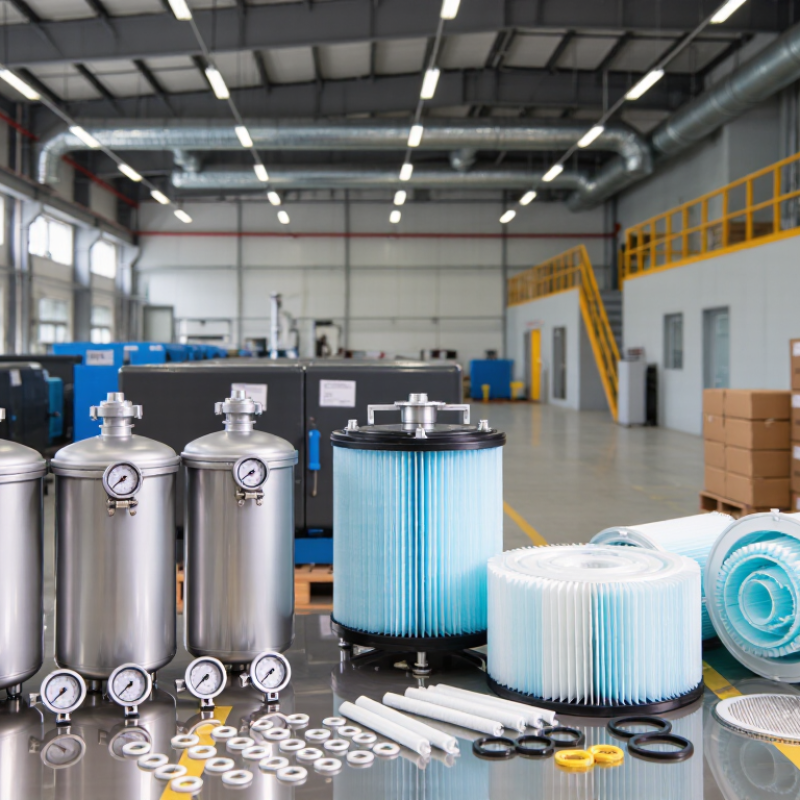
In many systems, a pre-filter sits before a refrigerated or desiccant dryer. It helps protect the dryer from compressor oil and debris. A fine coalescing filter may follow the dryer to capture residual oil mist and droplets. A particulate after-filter can then retain desiccant dust. The right arrangement depends on the dryer design, required air quality, and pressure drop. Check the equipment manual rather than relying on a generic diagram.

These filters are used in workshops, packaging lines, paint booths, food processing, laboratories, and pneumatic controls. A wet receiver drain, for example, can allow water to travel toward a tool. A correctly sized filter can help intercept contaminants, but it cannot correct poor drainage or undersized piping. Monitor differential pressure, drain operation, and element condition. Replace elements according to the service schedule or when pressure loss rises. The housing may look clean while the element is loaded. Measure, don’t guess.
How China’s Air Dryer Filter Manufacturing Sector Is Organized

China’s air dryer filter sector is organized around three layers: specialist element makers, complete-unit assemblers, and contract suppliers serving equipment manufacturers. Their products range from particulate and coalescing filters to activated-carbon units, housings, and automatic drains. Some factories focus on filter media and replacement elements; others integrate filtration with dryers and compressed-air controls. The boundary is not always clean. A supplier may make its own housings but outsource precision media.

Quality depends on more than a polished casing. Buyers should ask for flow-rate and pressure-drop test conditions, element replacement intervals, and evidence that performance remains stable under humid, dusty operation. The U.S. Department of Energy’s Improving Compressed Air System Performance sourcebook estimates that compressed air uses about 10% of industrial electricity. It also notes that leaks can waste 20–30% of compressor output. That makes low pressure drop and reliable sealing practical cost issues, not brochure details. Small details matter.

ISO 8573-1 classifies compressed-air purity by particles, water, and oil, giving buyers a useful basis for comparing specifications. Factory audits can check media traceability, batch testing, and assembly controls. Yet paperwork alone is thin evidence. Request sample test records and confirm that stated flow rates match the intended operating pressure. A filter that looks adequate on a bench may behave differently on a busy production line.

Which Types of Manufacturers Serve Different Buyer Needs

Air dryer filter manufacturers serve different needs, even when their products look similar. Specialist filter makers focus on particulate and oil-removal elements, housings, and replacement cartridges. They suit plants with known flow rates and contamination levels. Ask for rated capacity, pressure drop, and the test conditions behind published efficiency figures. Numbers need context.

Integrated compressed-air equipment manufacturers offer filters alongside dryers and other treatment components. This can simplify system matching, especially when a buyer needs a specified pressure dew point or wants fewer suppliers. However, a complete package may not fit an older installation. Check connection sizes, working pressure, and service access before ordering.

Custom engineering manufacturers can adapt housing materials, port layouts, or element dimensions for unusual environments and equipment. They may be useful for machinery builders or facilities with tight installation space. Smaller buyers often prefer manufacturers with standard products, clear documentation, and accessible technical support. Fit matters. A low quote can seem persuasive, but mismatched flow capacity may increase pressure loss and maintenance. I would verify replacement-element availability and request a sample drawing; these checks are easy to overlook during procurement.

Best Air Dryer Filter Manufacturers in China for Buyers? - Which Types of Manufacturers Serve Different Buyer Needs

Manufacturer Type Typical Products Best Suited For Potential Advantages What Buyers Should Verify
Compressed-Air Treatment Specialists Refrigerated and desiccant air dryers, line filters, condensate drains, and related treatment equipment Buyers seeking a coordinated system for removing moisture, oil aerosols, and solid particles from compressed air Product range may cover several stages of air treatment, making equipment selection and system matching more convenient Rated flow, inlet conditions, pressure drop, pressure dew point, filter element specifications, and operating limits
Industrial Filtration Manufacturers Particulate, coalescing, and activated-carbon filters; replacement elements and filter housings Facilities that already have dryers and need filtration selected for specific air-quality requirements Can offer filter-focused options for different contaminant types and installation arrangements Element compatibility, filtration performance claims, service life conditions, replacement availability, and housing pressure rating
Integrated Compressed-Air Equipment Manufacturers Air compressors, dryers, filters, receivers, and packaged air systems New installations or projects where buyers prefer equipment from a coordinated product range May simplify system configuration, equipment coordination, and procurement across multiple components System sizing, component specifications, service responsibilities, installation requirements, and warranty coverage for each item
OEM and Private-Label Manufacturers Customized dryer or filter configurations, product labeling, packaging, and components made to buyer specifications Importers, distributors, and equipment businesses developing or expanding their own product range May support customization of product details and supply arrangements for repeat orders Minimum order quantity, sample approval, quality-control process, intellectual-property terms, lead time, and change-control procedures
Application-Focused Process-Air Manufacturers Air-treatment equipment configured for demanding process or production environments Buyers in sectors such as food processing, pharmaceuticals, electronics, or other applications with defined air-quality needs May provide application-specific selection support and documentation suited to the operating environment Required air-quality class, materials, applicable compliance documentation, validation needs, and suitability for the intended process

Buyer note: Compare equipment under the same operating conditions. Confirm flow capacity, inlet temperature, working pressure, ambient conditions, required dew point, and the air-quality specification before requesting quotations.

How Buyers Can Compare Chinese Air Dryer Filter Manufacturers

Best Air Dryer Filter Manufacturers in China for Buyers?

How Buyers Can Compare Chinese Air Dryer Filter Manufacturers

Compare operating evidence, not catalogue claims. Define required flow, inlet temperature, working pressure, and target ISO 8573-1 purity classes. Ask for pressure-drop curves at your operating flow; a compact housing may perform differently during peak demand. Request element replacement intervals, materials, and documented test results. A U.S. Department of Energy sourcebook estimates compressed-air systems use roughly 10% of electricity in U.S. manufacturing. Its report, Improving Compressed Air System Performance, offers broad context, not a filter-specific benchmark. This makes lifecycle pressure loss worth checking alongside purchase price.

Tips: Compare quotations using identical flow units and inlet conditions. Verify serial traceability, spare-element availability, warranty terms, and regional response times. Ask for the test method and raw results. Small details matter.

When assessing Chinese suppliers, request a sample or witnessed test, then check dimensions and seals against your dryer. Confirm whether performance data covers the complete assembly, not just the filter media. Review delivery records and examples of corrective action, while treating unusually long service-life claims cautiously. A supplier may respond quickly but omit test conditions. Record the gap and ask again. Documentation can be uneven; that deserves attention.

How to Verify a Supplier Before Placing an Order

Best Air Dryer Filter Manufacturers in China for Buyers?
How to Verify a Supplier Before Placing an Order

A polished catalogue is not proof of manufacturing capability. Ask for the factory address, production records, and a live video walkthrough showing filter assembly and testing. Request a sample with a batch number, then match that number to its inspection report. For each model, confirm rated flow, working pressure, pressure drop, and filtration performance under stated test conditions. A certificate should identify the product scope, issuing body, and validity period; verify it directly with the issuer. ISO 8573-1 class claims should match your required compressed-air purity, not just appear on a brochure.

The U.S. Department of Energy’s Improving Compressed Air System Performance sourcebook says compressed-air systems use about 10% of industrial electricity, and sometimes much more. That makes pressure loss worth checking: ask suppliers for test data at your operating flow, not only a best-case figure. Also request replacement-element availability, warranty terms, and two customer references in comparable applications. Calls can reveal details documents miss. Still, a reference is not an independent audit.

Tips: Send the same technical questionnaire to every shortlisted supplier. Compare stamped drawings, test conditions, and sample results side by side. If a supplier will not explain a mismatch, pause before paying a deposit.

Best Air Dryer Filter Manufacturers in China: Verify the Required Dew Point

Before placing an order, confirm that the supplier can document the pressure dew point your application requires. The chart shows the pressure dew point limits for water classes 1–6 in ISO 8573-1:2010; it does not represent the performance of any particular manufacturer.

Lower pressure dew points indicate drier compressed air. Ask for test reports at the specified operating pressure and verify the product’s rated flow, pressure, and filtration performance before ordering.