Top 10 Air Compressor Filter Dryer Manufacturers Worldwide
Compressed air looks invisible, but its quality is measurable: water droplets collect in drain bowls, oil aerosols stain downstream piping, and pressure losses show up at the tool. For manufacturers, choosing an Air Compressor Filter Dryer is therefore a reliability decision, not just a catalog comparison. The U.S. Department of Energy’s Improving Compressed Air System Performance sourcebook notes that compressed air can represent about 10% of industrial electricity use. That makes efficient treatment and well-maintained equipment worth careful attention.
Compressed-air specialist Ron Marshall is often associated with practical, system-level advice. The following is an editorial paraphrase, not a verbatim quotation: “Choose air treatment for the point of use, then check the pressure drop and maintenance cost.” It is a plain rule. It also invites a useful doubt: a high-efficiency filter may still be the wrong choice if it is oversized, poorly serviced, or paired with an unsuitable dryer. Buyers should compare rated flow, inlet conditions, outlet pressure dew point, filtration performance, service intervals, and independent test documentation. Manufacturer specifications matter, but published claims deserve verification.
This “Top 10 Air Compressor Filter Dryer Manufacturers Worldwide” overview examines suppliers through those practical measures, alongside product range, technical support, and documented performance. No ranking can fit every plant. A food-packaging line, a paint booth, and a general workshop do not need identical air quality. Readers should treat the shortlist as a starting point, then match each option to actual demand, operating conditions, and lifecycle cost.
Understanding Air Compressor Filter Dryers and Their Purpose
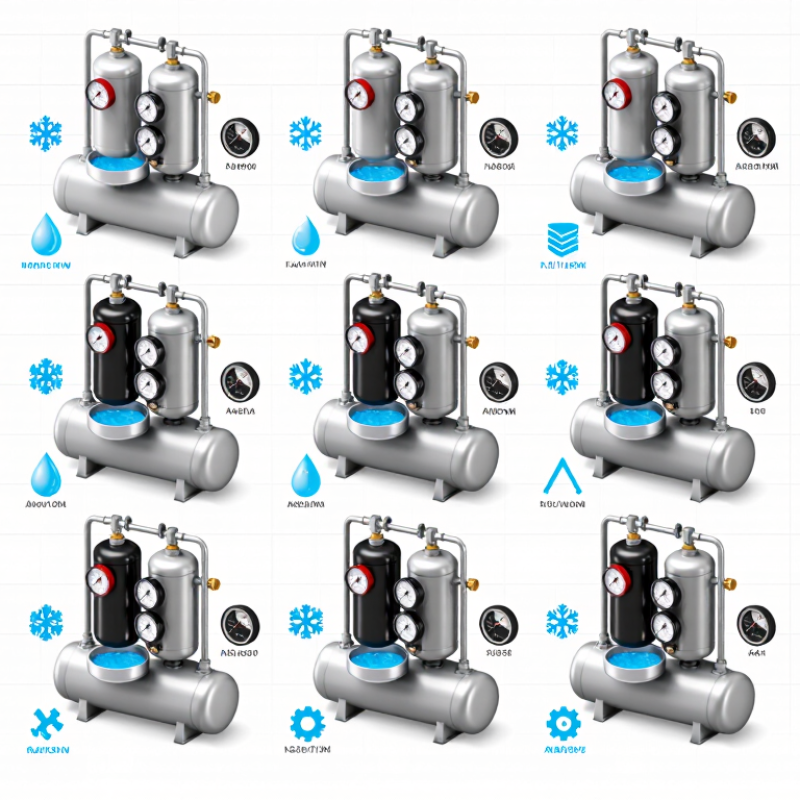
Compressed air can look clean while carrying water vapor, rust particles, and traces of compressor oil. As the air cools in pipes, some vapor condenses into liquid water. That moisture can corrode tools, damage pneumatic valves, and spoil paint finishes. A filter traps particles and, in suitable designs, oil aerosols; it does not remove all water vapor. A dryer lowers the air’s moisture content to help prevent condensation downstream. Different jobs matter. Neither device replaces the other.
The right setup depends on the required pressure dew point, airflow, operating temperature, and acceptable pressure drop. A refrigerated dryer suits many general workshop systems, while desiccant drying can reach lower dew points for more moisture-sensitive processes. Check the compressor’s rated flow and the dryer’s actual capacity under expected conditions; published figures may assume specific inlet temperatures and pressures. Small details count. Inspect filter elements and drain condensate regularly, since a blocked element or failed drain can undermine otherwise sound equipment. It is easy to assume that dry air means perfect air, but particulate and oil control still need attention. Measurements at the point of use can reveal problems that a central reading misses.
How Filter Dryer Technologies Remove Moisture and Contaminants
Compressed air leaves the compressor hot and saturated with water vapor. As it cools in the aftercooler and receiver, much of that vapor condenses into liquid. A separator and automatic drain remove bulk water, but fine droplets and oil aerosols can travel downstream. They cause trouble.
A coalescing filter uses dense media to capture tiny liquid droplets and combine them into larger drops, which drain from the housing. Particulate filters trap rust, pipe scale, and other solids; their efficiency depends on the specified particle rating and proper installation. Refrigerated dryers cool air so more vapor condenses and can be drained. They suit many general-purpose systems, though their pressure dew point may not be low enough for cold environments.
For drier air, desiccant dryers pass compressed air through moisture-adsorbing material. One tower dries the air while another regenerates, often using purge air or heat. The outlet dew point should match the application, not simply be set as low as possible; extra-dry air can cost energy. Check differential pressure, drain operation, and dew-point trends during maintenance. A clogged filter can quietly raise energy use. Even good equipment cannot fix undersized piping or a failed drain. The details are easy to miss.
Air Compressor Filter-Dryer Technologies: Moisture Removal Performance
Typical pressure dew-point targets for common compressed-air dryer technologies
Lower pressure dew points indicate drier compressed air. Refrigerated dryers cool air to condense moisture; membrane dryers move water vapor through selective membranes; and desiccant dryers adsorb water vapor onto drying media. Particulate and coalescing filters capture solid particles and liquid aerosols. Values shown are representative targets, not guaranteed performance; actual results depend on system design and operating conditions.
Criteria for Comparing Manufacturers Across the Global Market
Comparing air compressor filter dryer manufacturers requires more than checking rated flow. Buyers should compare pressure dew point, residual oil, particle removal, pressure drop, and energy use under matching inlet conditions. ISO 8573-1 helps define compressed-air purity classes, while ISO 7183 provides a framework for testing compressed-air dryers. Ask for test conditions, not just headline figures.
Energy performance matters because treatment equipment runs alongside the compressor. The U.S. Department of Energy’s Improving Compressed Air System Performance: A Sourcebook for Industry estimates compressed air uses about 10% of manufacturing electricity. Compare dryer power at the actual operating pressure and flow, then include filter pressure loss. A small pressure drop can increase compressor demand across long shifts. Check drain behavior, too. Condensate left in a housing can undermine otherwise sound filtration.
Serviceability deserves equal weight: element availability, replacement intervals, local technical support, and clear maintenance instructions. The DOE sourcebook also notes that leaks in poorly maintained systems can waste 20–30% of compressor output, so evaluate whether a supplier supports system-level checks, not only equipment sales. One comparison weakness is relying on catalog values; real plants face changing temperatures and loads. Request performance evidence at conditions close to the installation, and record assumptions when direct testing is unavailable.
Profiles of Ten Leading Air Compressor Filter Dryer Manufacturers
Profiles of ten leading air compressor filter dryer manufacturers reveal different strengths, not one universal solution. Some focus on compact refrigerated dryers for steady workshop demand. Others offer desiccant systems for low dew points or modular filters for changing flow rates. Compare stated pressure drop, operating temperature, service intervals, and replacement-element availability. Small details matter. A housing that fits a plant layout may still restrict access during maintenance.
The U.S. Department of Energy’s Improving Compressed Air System Performance: A Sourcebook for Industry reports that compressed air can account for about 10% of industrial electricity use, with higher shares at some facilities. That makes dryer energy demand and pressure loss useful comparison points. Yet published specifications do not always reflect real operating conditions. Ask how performance changes under humid inlet air, partial loads, and frequent starts. Evidence from the installed system is more convincing than a brochure alone.
Tips: Check required air quality against ISO 8573-1, then size equipment using measured flow and inlet conditions. Review drain design, filter replacement access, and dew-point monitoring before purchase. Ask each supplier for test conditions behind its figures. A little skepticism helps. Don’t choose by nominal capacity alone.
Industry Trends Shaping Filter Dryer Design and Performance
Air compressor filter dryer design is shifting toward lower energy use and more precise moisture control. Buyers increasingly compare pressure drop, flow capacity, and outlet dew point, not just purchase price. Refrigerated units suit many general-purpose systems, while desiccant dryers serve applications needing much drier air. The right choice depends on inlet temperature, humidity, and actual demand.
Smart sensors can track dew point, filter loading, and service intervals. These readings help teams spot problems before wet air reaches tools or production lines. Variable-speed controls also help some dryers respond to changing air demand. Yet added electronics are not automatically better. A sensor needs calibration, and a dashboard cannot fix poor sizing. One awkward reality: catalogue performance may not match a hot, dusty compressor room.
Tips: Check the specified flow and dew point at your real operating conditions. Keep drains accessible, replace filters on schedule, and record pressure readings. A small pressure loss can become a steady energy cost. If demand swings widely, measure it before selecting a dryer; estimates are often imperfect.



 Email
Email Whatsapp
 WeChat