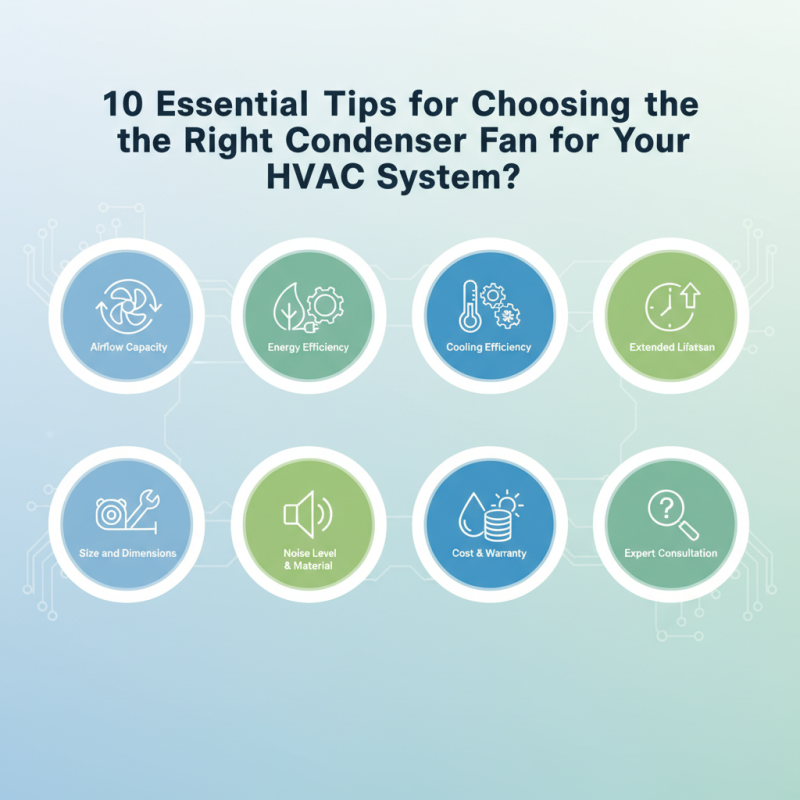
10 Essential Tips for Choosing the Right Condenser Fan for Your HVAC System?
When it comes to HVAC systems, choosing the right condenser fan is crucial. Industry expert John Smith, a seasoned HVAC technician, once stated, "The efficiency of your system largely depends on the condenser fan you choose." This highlights the importance of making an informed decision.
Selecting an appropriate condenser fan can be challenging. Often, customers overlook critical factors, such as airflow capacity and energy efficiency. A well-chosen fan can improve performance, while a poor choice might lead to unnecessary costs and repairs.
Many users fail to consider the size and compatibility of the condenser fan with their existing system. This oversight can impact not only comfort but also energy consumption. The right condenser fan enhances cooling efficiency and may even extend the system's lifespan. Therefore, it’s essential to weigh your options carefully. Each decision shapes the overall performance of your HVAC system.
Understanding the Role of Condenser Fans in HVAC Systems
Condenser fans play a vital role in HVAC systems by expelling heat from refrigerant, thus ensuring efficient operation. According to the U.S. Department of Energy, improper fan selection can reduce system efficiency by up to 30%. So understanding how these fans work is crucial for optimal performance.
When choosing a condenser fan, consider its airflow capacity, measured in cubic feet per minute (CFM). Fans should match the needs of your system for maximum effectiveness. A fan with insufficient airflow can lead to system strain and higher energy costs. According to industry reports, businesses can save 15% on cooling costs by optimizing their fan systems.
Inadequate maintenance can result in subpar performance. Dust and debris can block airflow, making the fan work harder than necessary. Regular cleaning can extend the life of your fan and improve efficiency. HVAC professionals recommend routine inspections to identify potential issues early. The right fan ensures not just cooling effectiveness, but also a longer lifespan for your HVAC system.
Key Factors to Consider When Selecting a Condenser Fan
When selecting a condenser fan for your HVAC system, key factors play a critical role. The fan size must match your system's specifications. An undersized fan can lead to poor airflow and increased energy costs, while an oversized fan may cause excessive noise. According to the Energy Star program, inefficient HVAC systems can waste up to 30% of energy, highlighting the importance of making informed choices.
Another important consideration is the fan's air delivery capability, measured in CFM (cubic feet per minute). Higher CFM ratings indicate better airflow, which can enhance cooling efficiency. A study by the American Society of Heating, Refrigerating and Air-Conditioning Engineers (ASHRAE) found that proper airflow can improve system performance and longevity. Additionally, the materials used in fan construction can impact durability. For instance, fans made of high-grade plastics or metals resist corrosion better than cheaper alternatives.
Noise level is often overlooked but crucial, especially in residential areas. Fans with lower decibel ratings ensure a quieter operation, reducing disturbances. Some fans, however, may produce unexpected vibrations. Regular maintenance can mitigate these issues, but it’s crucial to assess noise ratings before making a final decision. Considering these factors will help ensure your selected condenser fan meets both performance and comfort needs effectively.
Assessing Compatibility with Your Existing HVAC Infrastructure
When selecting a condenser fan for your HVAC system, compatibility with your existing infrastructure is crucial. Start by checking the specifications of your current HVAC setup. Look for the size and capacity of your existing fan. Measurement is key here—buying the wrong size can lead to inefficiency and increased costs.
Consider the motor type as well. Some systems require specific motor compatibility. Ensure that any new fan matches the specifications set by your HVAC manufacturer. A mismatch can cause operational issues or even damage the system. Pay attention to the airflow capacity as well.
Installation can be a challenge. If the new fan does not align with existing mounts, additional adjustments may be necessary. Be prepared for potential modifications in your HVAC setup. This highlights the importance of research. Trust your findings, but also consult professionals if uncertain. Compatibility is not just a convenience; it is essential for your system's reliability and longevity.
10 Essential Tips for Choosing the Right Condenser Fan for Your HVAC System
| Tip Number |
Tip Description |
Considerations |
Benefits |
| 1 |
Check Compatibility with Existing Unit |
Ensure fan size matches your HVAC system's dimensions |
Prevents operational issues and inefficiency |
| 2 |
Evaluate Airflow Requirements |
Consider CFM (Cubic Feet per Minute) requirements |
Improved cooling performance |
| 3 |
Inspect Energy Efficiency Ratings |
Look for high SEER or EER ratings |
Lower utility bills and reduced environmental impact |
| 4 |
Consider Noise Levels |
Check decibel ratings |
Quieter operation enhances comfort |
| 5 |
Review Build Quality and Materials |
Select corrosion-resistant materials |
Increases lifespan of the unit |
| 6 |
Explore Features like Variable Speed |
Consider models with advanced motor technology |
Optimizes performance based on demand |
| 7 |
Assess Ventilation Needs |
Match fan size to ductwork |
Ensures proper air distribution |
| 8 |
Check for Warranty and Support |
Select models with good customer service |
Peace of mind and protection for your investment |
| 9 |
Look into Maintenance Requirements |
Consider ease of cleaning and replacing parts |
Saves time and cost in the long run |
| 10 |
Seek Professional Advice |
Consult with HVAC specialists |
Informed choices lead to better efficiency |
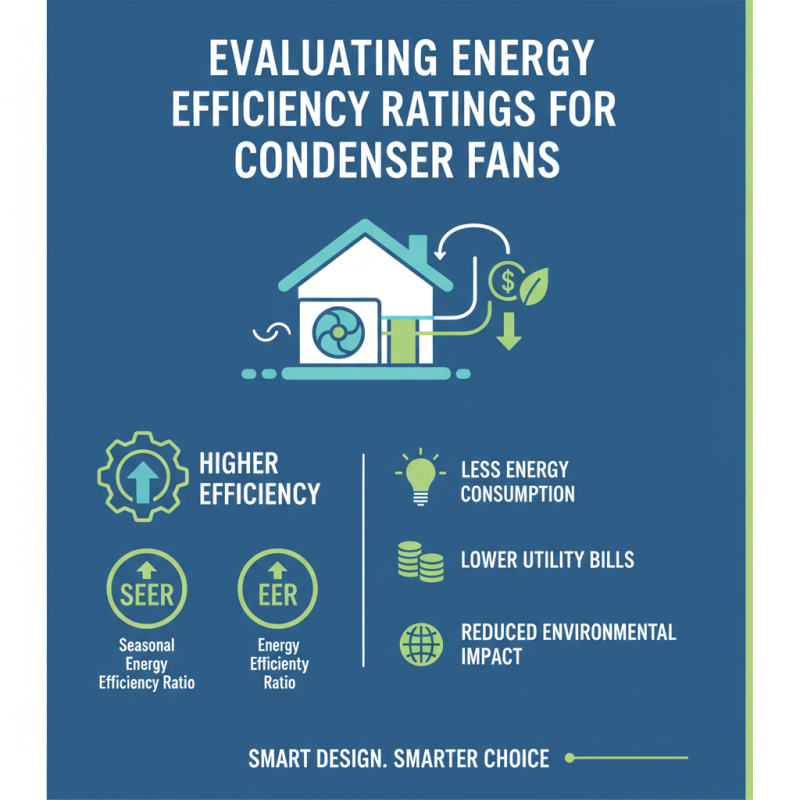
Evaluating Energy Efficiency Ratings for Condenser Fans
When selecting a condenser fan for your HVAC system, energy efficiency ratings are crucial. These ratings indicate how well a fan converts electrical power into cooling effectiveness. More efficient fans consume less energy, which translates to lower utility bills and a reduced environmental impact. Understanding these ratings can guide your choice. Look for fans with high Seasonal Energy Efficiency Ratios (SEER) or Energy Efficiency Ratios (EER). High ratings often signify superior design and construction.
However, evaluating energy efficiency is not always straightforward. Sometimes, a fan may have a high EER yet not perform well in all operating conditions. Factors such as airflow, noise level, and durability should also be considered. A fan with a slightly lower efficiency might serve better in your specific climate or system. Always balance efficiency with actual performance ratings from trusted sources. Don't just focus on the numbers; consider user reviews and expert insights too.
Maintenance and Longevity Considerations for Condenser Fans
When selecting a condenser fan for your HVAC system, maintenance and longevity are crucial considerations. Proper maintenance can extend the lifespan of your condenser fan by up to 30%, according to industry reports. Regularly inspecting the fan for dirt and debris can prevent overheating and reduce wear. Ensure the fan blades are clean and free of obstructions. A buildup of dirt can decrease efficiency, leading to higher energy costs.
Consider using high-quality lubricants for motor components. This can prevent friction and wear, potentially extending the motor's life. According to the U.S. Department of Energy, well-maintained fans can run up to 25% more efficiently than neglected counterparts. Additionally, check the fan’s motor for signs of damage or noise, as these could indicate a need for replacement.
Investing in durable materials can also pay off. Fans made from corrosion-resistant materials may last longer under harsh conditions. Another tip is to schedule professional inspections annually to catch any issues early. Remember, proactive maintenance is more cost-effective than repairs or replacements. Balancing between maintenance and energy efficiency is key to maximizing the performance of your HVAC system.
10 Essential Tips for Choosing the Right Condenser Fan for Your HVAC System
The following bar chart illustrates the important factors to consider when selecting a condenser fan for your HVAC system.



 Email
Email Whatsapp
 WeChat