Leave Your Message

What Are Fan Motors and How Do They Work?

Fan Motors are the quiet drivers behind ventilation, cooling, air circulation, and many industrial processes. Hidden inside ceiling fans, HVAC units, refrigeration equipment, and air handlers, they convert electrical energy into controlled rotary motion. That motion turns fan blades, moves air, and influences comfort, indoor air quality, and operating costs.

The International Energy Agency reports that electric motor systems consume roughly half of global electricity. This broader figure includes pumps, compressors, conveyors, and fans, but it shows why motor efficiency deserves attention. The U.S. Department of Energy also identifies fans and blowers as important energy users in commercial and industrial facilities. Small design choices can matter. A clogged filter forces a motor to work harder. An incorrect blade angle can create noise and wasted power. A worn bearing may produce heat before failure becomes obvious.

The basic process is straightforward. Electricity creates a magnetic field inside the motor. That field produces torque, which rotates the shaft and connected impeller. Different designs use alternating current, direct current, or electronically controlled drives. Each choice affects speed control, starting current, noise, maintenance, and service life. ASHRAE guidance emphasizes matching fan performance with system resistance, rather than judging motors by power alone.

The details are less simple.

Actual performance changes with voltage, airflow, temperature, load, and installation quality. Manufacturer ratings also depend on test conditions. Therefore, this guide treats published data as a starting point, not an absolute promise. Understanding these limits helps engineers, technicians, and buyers select Fan Motors more responsibly and avoid efficiency claims that sound better than real-world results.
What Are Fan Motors and How Do They Work?

What Is a Fan Motor?

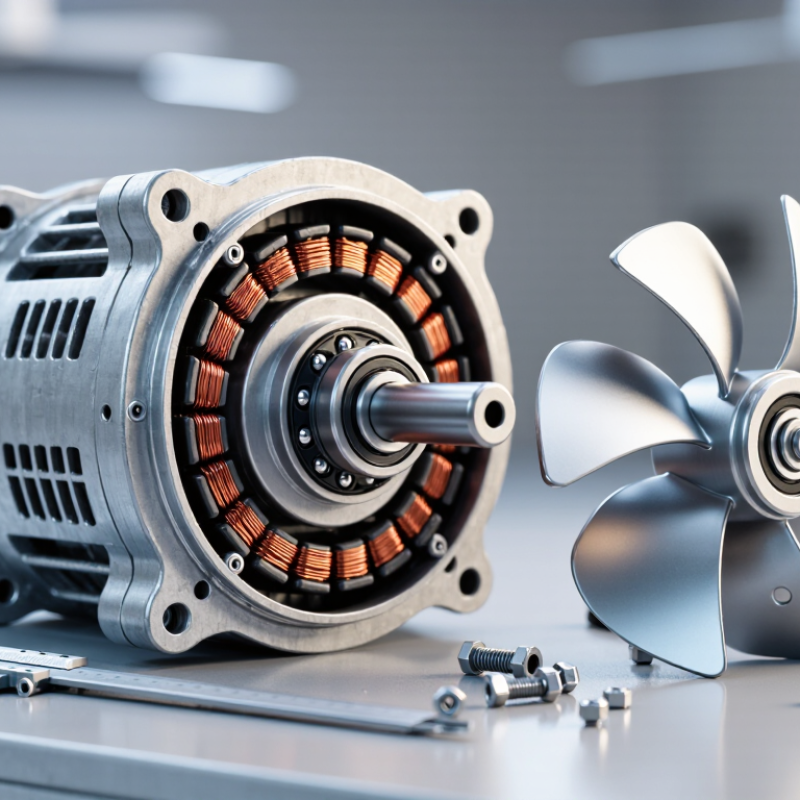
A fan motor is the working part that turns electrical energy into rotating motion. It drives the blades through a shaft, creating airflow across a room, machine, or ventilation system. Inside, a stationary stator produces a magnetic field. The rotor responds to that field and spins. Bearings help the shaft rotate smoothly, while insulation protects the windings from electrical contact. Many alternating-current motors use a capacitor to support startup and steady operation. Some direct-current motors use electronic controls for speed adjustment and energy efficiency.

Motor design affects noise, airflow, heat, and service life. A small motor may run quietly but struggle under heavy dust or restricted airflow. A larger motor can move more air, yet it may consume more energy.

Hands-on inspection often reveals practical clues: warm housing a slow startup humming or uneven blade movement.

Not every noise means failure. A loose guard or dry bearing can create similar symptoms. This is where diagnosis becomes imperfect. Measurements such as voltage, current, and winding resistance provide better evidence than sound alone.

Power should be disconnected before inspection, and damaged insulation should never be ignored. Regular cleaning, suitable lubrication where permitted, and unobstructed ventilation can reduce stress on the motor. Still, maintenance advice depends on the motor’s construction and operating environment.

Main Components of a Fan Motor

A fan motor converts electrical energy into controlled rotation. Its stator remains fixed and creates a magnetic field. The rotor responds to that field and turns around the central shaft. This movement transfers torque to the fan blades. In many designs, copper windings sit inside the stator. Their arrangement affects speed, efficiency, and operating noise.

The shaft connects the rotor to the blade assembly. Bearings support this shaft and reduce friction during rotation. Poor alignment can create vibration, even when the electrical circuit works correctly. A capacitor may help start the motor or maintain steady running speed. Electronic control boards perform similar tasks in more advanced motors. The housing protects these internal parts from dust, contact, and accidental impact.

Thermal protection is another important component. A small protective device can interrupt power when heat rises beyond a safe level. This matters because blocked airflow may force the motor to work harder. I have found that a dirty grille can imitate a motor fault. That assumption is easy to make, but it needs checking. Inspecting blade balance, bearing noise, wiring, and airflow often reveals the real problem. Some motors also include speed sensors, which provide operating feedback to the controller. Their placement and calibration can influence response accuracy.

How Fan Motors Convert Electricity Into Motion

A fan motor converts electrical energy into the steady motion of its blades. When current enters the stator, it creates a changing magnetic field. That field pulls and pushes the rotor around its center. The rotor connects to a shaft, and the shaft turns the fan blades. Air then moves from the blade angle and rotation. Simple in appearance, but carefully controlled.

In many household fans, a capacitor helps create a phase difference between electrical currents. This gives the motor enough starting torque to begin rotating. Electronic controls may adjust current frequency or voltage, changing the fan’s speed. A motor running too slowly can lose cooling airflow. A motor working too hard may produce heat, noise, or a faint electrical smell. It is easy to blame the blades, yet worn bearings can be the real problem.

Tips: Keep air inlets free from dust, because blocked airflow raises motor temperature. Listen for grinding or irregular humming. Those sounds deserve inspection. Disconnect power before cleaning or checking any fan. A soft brush is safer than forcing dust deeper inside. Use the correct replacement capacitor when required. Guessing can damage the motor. One practical detail is often overlooked: vibration may come from an unbalanced blade, not a failing motor. Careful observation matters, although diagnosis is not always perfect.

What Are Fan Motors and How Do They Work? — How Fan Motors Convert Electricity Into Motion

Data Dimension Information How It Relates to Fan Operation
Primary Function Convert electrical energy into rotational mechanical energy The rotating shaft turns the fan blades, creating airflow.
Main Energy Conversion Electrical energy → magnetic fields → torque → shaft rotation → airflow Electromagnetic forces produce torque inside the motor, while the blades transfer mechanical energy to the air.
Essential Motor Parts Stator, rotor, shaft, bearings, windings, housing, and electrical connections The stator produces the magnetic field, the rotor responds to it, and the shaft transfers rotation to the blades.
Stator The stationary magnetic structure containing copper windings or electromagnets When current flows through the windings, the stator creates a magnetic field that drives rotor movement.
Rotor The rotating part positioned inside or beside the stator Magnetic attraction, repulsion, or induced current causes the rotor to rotate.
Common Motor Type Single-phase induction motor Frequently used in household fans because it is durable, relatively simple, and suitable for alternating-current supplies.
Electronically Commutated Type Brushless DC motor, commonly called a BLDC motor Electronic circuits switch the stator windings in sequence, allowing efficient speed control without mechanical brushes.
Starting Mechanism Auxiliary winding, capacitor, shaded pole, or electronic controller The starting system creates a rotating or shifting magnetic field that initiates rotor movement.
Speed Control Voltage adjustment, winding taps, phase control, or electronic commutation Changing the motor’s electrical input changes torque and rotational speed, which changes airflow.
Typical Fan Speed Approximately 500–1,800 revolutions per minute for many residential fans Actual speed depends on blade design, motor type, electrical frequency, load, and selected speed setting.
Electrical Input Alternating current or electronically converted direct current AC motors use the supply waveform directly, while BLDC systems typically convert AC input to DC before electronic switching.
Power Consumption Often about 15–100 watts for residential fans, depending on size and design Larger blades, higher speeds, stronger airflow, and mechanical resistance generally require more input power.
Torque Rotational force generated by electromagnetic interaction Torque must overcome bearing friction, air resistance, blade inertia, and other mechanical loads.
Airflow Measurement Commonly expressed as cubic feet per minute or cubic metres per hour Airflow indicates how much air the fan moves over time and is affected by blade pitch, diameter, and speed.
Heat Production Electrical resistance and mechanical friction produce heat Ventilation, proper lubrication where applicable, and thermal protection help prevent overheating.
Protection Features Thermal fuse, thermal protector, current limiting, and overload protection These features reduce the risk of damage caused by stalled blades, blocked ventilation, excessive current, or overheating.
Main Efficiency Losses Winding resistance, core losses, bearing friction, air drag, and electronic switching losses The portion of input energy not converted into useful shaft power appears mainly as heat, sound, and vibration.

Different Types of Fan Motors

Fan motors convert electrical energy into the rotation that moves air.

Their design affects airflow, noise, efficiency, and service life. Different fan motors suit different working conditions.

AC induction motors are common in larger ventilation equipment. A rotating magnetic field turns the rotor without brushes. They are sturdy and tolerate dusty rooms, but speed control can be limited.

Capacitor-run motors offer steady operation in household and light commercial fans. Their start and run circuits use a capacitor to improve torque.

A failed capacitor may cause humming, slow starts, or overheating.

Shaded-pole motors are compact and inexpensive. They work well in small fans, yet their efficiency is modest.

Brushless DC motors use electronic switching instead of mechanical brushes. They usually provide precise speed control and lower energy use.

Universal motors deliver high speed and strong starting torque. However, brushes create wear, electrical noise, and maintenance needs.

The distinction is not always neat.

Some modern fans combine motor types with sensors, controllers, and thermal protection.

During inspection, check the nameplate, shaft play, bearing noise, and capacitor condition.

A hot motor is not automatically defective. Blocked grilles and unbalanced blades can create the same symptom.

Choosing only by wattage causes mistakes.

Airflow demand, duty cycle, humidity, and control method matter too.

No motor is perfect.

Factors That Affect Fan Motor Performance

What Are Fan Motors and How Do They Work?

Factors That Affect Fan Motor Performance

A fan motor converts electrical energy into rotation. That rotation moves air through blades, ducts, or a cooling assembly. In practical inspections, performance depends on more than the motor’s rated power. Air resistance, operating hours, and installation quality also matter.

Voltage must stay within the motor’s specified range. Low voltage can reduce speed and increase heat. Excessive voltage may damage internal components. The connected load matters too. A blocked filter or narrow duct forces the motor to work harder. Dust on the blades creates imbalance and increases vibration. Small problems become expensive when ignored.

Temperature strongly affects reliability. Motors installed near heat sources may lose efficiency sooner. Ventilation openings should remain clear. Bearings need proper lubrication when the design requires it. Sealed bearings are different and should not be treated casually. I have seen loose mounting screws create noise that sounded like a motor fault. It was not.

Control settings also influence performance. Frequent starts and stops can stress windings and switches. Speed controllers must match the motor’s electrical design. A simple adjustment is not always harmless. I once assumed a louder fan only needed cleaning, but the real issue was a worn bearing. That mistake reinforced the value of checking current, vibration, airflow, and temperature together. Measurements reveal more than sound alone.