Leave Your Message

China Top 10 Heat Blower Fan Suppliers in 2026

China’s Heat Blower Fan sector enters 2026 with broader applications and sharper performance expectations. These products now support heating equipment, industrial drying, ventilation systems, appliances, and compact thermal devices. Buyers need more than attractive prices. They need stable airflow, controlled temperature, quiet operation, and dependable service.

Dr. John H. Lienhard V, a respected heat-transfer scholar, explains that “heat transfer is the exchange of thermal energy caused by a temperature difference.” This principle remains practical when evaluating every Heat Blower Fan. A strong supplier should understand airflow resistance, motor efficiency, heater safety, noise control, and long operating cycles. Factory evidence matters. Look for test records, material specifications, production photos, and clear quality procedures.

This guide introduces China’s top 10 Heat Blower Fan suppliers in 2026. The comparison considers manufacturing experience, product customization, thermal performance, certifications, delivery capability, and after-sales support. Some suppliers excel in compact fan heaters. Others focus on industrial systems with ceramic elements, metal housings, or high-temperature assemblies. The difference can appear in small details, such as a loose terminal, uneven airflow, or a motor that becomes noisy after months of use.

No ranking is perfect. Supplier information changes, and published claims require verification. A polished website cannot replace samples, factory audits, and measured test results. Buyers should also confirm voltage, frequency, duty cycle, inlet temperature, and installation conditions before ordering. These practical checks may feel slow. They often prevent expensive mistakes.
China Top 10 Heat Blower Fan Suppliers in 2026

What Heat Blower Fans Are and How They Work

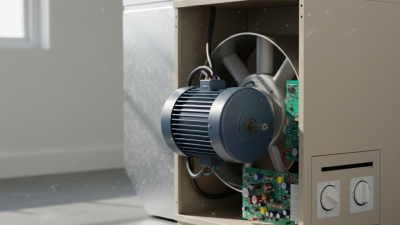
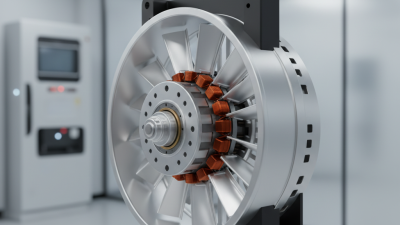
Heat blower fans combine a motor, impeller, heating element, and protective housing. The motor spins the impeller, creating airflow through the intake. Air then passes over heated metal coils or ceramic elements. The outlet releases a focused stream of hot air. A thermostat controls temperature, while a thermal fuse limits overheating.

The fan and heater must work together. Higher airflow can lower outlet temperature, even when electrical input stays unchanged. A narrower nozzle increases air velocity, but it may also raise back pressure. This is where supplier testing matters. The U.S. Department of Energy’s Industrial Decarbonization Roadmap (2022) reports that process heating represents about 51% of energy use in U.S. manufacturing. Small efficiency gains can therefore matter in repeated industrial tasks.

European Commission research on fans estimates European fan systems consume roughly 344 TWh of electricity each year. The figure covers many applications, not only heat blowers. Still, it shows why motor efficiency, airflow control, and operating-point tests deserve attention. For 2026 supplier comparisons, request airflow, pressure, power, temperature stability, and noise data under identical conditions. Laboratory curves can look impressive. Real workshops are dirtier, colder, and less predictable. That limitation deserves honest review. A blower that heats quickly may waste energy if its airflow is poorly matched to the work surface.
How to Evaluate Heat Blower Fan Suppliers in China

China Top 10 Heat Blower Fan Suppliers in 2026

How to Evaluate Heat Blower Fan Suppliers in China

Evaluating a heat blower fan supplier requires more than comparing unit prices. IEA’s Energy Efficiency 2023 report estimates that electric motor systems consume nearly 50% of global electricity. Therefore, request measured airflow, static pressure, input power, and efficiency at several operating points. A supplier should provide test conditions, not only attractive catalogue figures. Check whether testing follows ISO 5801 or an equivalent recognized method.

Ask for motor insulation ratings, thermal protection, bearing specifications, noise data, and continuous operating limits. IEC 60335-1 is a useful reference for household and similar electrical appliance safety. For industrial equipment, confirm the applicable safety standards with your compliance team. Request recent factory inspection records, calibration certificates, and batch-level traceability. A reliable factory can explain how it controls winding temperature, impeller balance, and final electrical testing.

Do not judge capability from one polished sample. It can hide production variation. Run samples from different batches and record airflow after extended heating. The U.S. Department of Energy reports that properly selected and controlled motor systems can deliver meaningful energy savings, making efficiency verification commercially important. Visit the production line when possible. Check incoming-material inspection, automated testing, spare-part availability, and corrective-action records. Short answers deserve caution. A clear supplier should disclose tolerances, lead times, warranty boundaries, and known failure risks, even when those details weaken the sales pitch.

China Top 10 Heat Blower Fan Suppliers in 2026

How to Evaluate Heat Blower Fan Suppliers in China

This weighted evaluation model highlights the main criteria buyers should use when comparing Chinese heat blower fan suppliers. Thermal performance, airflow stability, energy efficiency, and product safety receive the highest weighting because they directly affect operating reliability, compliance, and total cost of ownership. Customization, quality consistency, and export support are also important for long-term purchasing decisions.

Evaluation weights are expressed as percentages of the total supplier assessment score and are intended for structured procurement comparisons rather than company-specific rankings.

China’s Top 10 Heat Blower Fan Suppliers in 2026

China’s Top 10 Heat Blower Fan Suppliers in 2026 reflect a practical shift toward safer, quieter, and more efficient thermal airflow systems. These suppliers mainly serve heating equipment, drying machines, bathroom heaters, ovens, and industrial ventilation projects. Their product ranges often include centrifugal blowers, compact axial fans, and custom motor assemblies.

A reliable supplier should provide more than a product catalogue. Factory experience matters during sample testing, especially when airflow drops under heat. Strong manufacturers usually share motor data, insulation grades, noise readings, and operating temperature limits. Ask for measured performance at several pressure points. One figure is not enough.

The leading ten suppliers also differ in production depth. Some build motors internally, while others focus on impeller design, housing production, or final assembly. This difference can affect delivery stability and repair support. Check balancing quality with a simple vibration test. It may reveal hidden weakness.

For 2026 sourcing, buyers should examine thermal endurance, bearing life, electrical protection, and batch consistency. Independent inspections can confirm whether samples match mass production. Certification documents deserve careful review, not blind trust. A low price may hide thinner insulation or weaker connectors. That happens.

Suppliers with clear drawings, traceable materials, and responsive engineering teams are easier to manage. However, even capable factories can miss a detail in a rushed project. Share the installation environment, expected duty cycle, voltage, airflow target, and space limits before ordering. A thoughtful technical discussion often prevents expensive redesigns. Efficiency is important, but stable performance matters more in real equipment.

Comparing Products, Performance, and Safety Features

China Top 10 Heat Blower Fan Suppliers in 2026: Comparing Products, Performance, and Safety Features

Evaluating China’s top ten heat blower fan suppliers requires more than comparing wattage and price. A typical portable heater uses about 1,500 watts, according to the U.S. Department of Energy. Airflow, heating speed, noise, and temperature stability also matter. A higher airflow rating may warm a room faster, but it can increase noise and dry air. That trade-off is often ignored. Look for suppliers that provide laboratory test data, thermal cutoff details, and clear operating instructions. Products aligned with IEC 60335-2-30 offer a stronger safety reference for household heating appliances.

Safety should remain the deciding factor. The U.S. Consumer Product Safety Commission reports an average of about 1,700 residential fires and 80 deaths annually involving portable heaters. Tip: Check for overheat protection, tip-over shutdown, flame-resistant materials, and a grounded plug. Ask whether each feature was tested under blocked-airflow conditions. A supplier’s certification logo alone is not enough. Test reports should identify the model, laboratory, date, and measured limits.

Performance comparisons should include a stable 22°C room test, one-meter noise readings, and heating time across several fan speeds. Also inspect plug quality, motor temperature, grille spacing, and cord flexibility. Some suppliers publish impressive thermal figures without explaining test conditions. That weakens confidence. In my view, the best supplier is not always the one with the fastest heat output. A slightly slower unit with consistent temperature control may be safer and more comfortable. Buyers should still verify factory quality records, batch inspections, and after-sales response before making a 2026 shortlist.

China Top 10 Heat Blower Fan Suppliers in 2026 - Comparing Products, Performance, and Safety Features
Rank Supplier Profile Typical Product Configuration Rated Voltage Rated Power Airflow Outlet Temperature Range Motor Type Heating Element Safety Features Typical Applications
1 Supplier Profile 01 Industrial portable heat blower 220–240 V AC 3.0 kW 350 m³/h 0–600°C Brushless AC motor Stainless-steel tubular element Thermal cutoff Overload protection Cool-down mode Plastic welding, shrink wrapping, paint stripping
2 Supplier Profile 02 High-temperature centrifugal blower heater 220–240 V AC 2.5 kW 280 m³/h 50–650°C Ball-bearing induction motor Mica-insulated resistance element Thermostat Fuse protection Metal housing Industrial drying, thermal forming, equipment maintenance
3 Supplier Profile 03 Compact digital hot-air blower 220–240 V AC 2.0 kW 250 m³/h 50–550°C Universal motor Nickel-chromium wire element Digital temperature control Overheat shutdown Insulated grip Electronics rework, adhesive removal, tubing shrinkage
4 Supplier Profile 04 Three-phase industrial air heater 380–400 V AC 6.0 kW 650 m³/h 50–500°C External-rotor fan motor Finned tubular heating bank Independent thermal limiter Phase-loss protection IP24 enclosure Factory air heating, drying tunnels, process ventilation
5 Supplier Profile 05 Portable dual-temperature heat gun 220–240 V AC 1.8 kW 450 L/min 350–600°C Compact brushed motor Ceramic-supported heating coil Two-stage switch Thermal fuse Non-slip handle Packaging, decals, cable work, light workshop use
6 Supplier Profile 06 Low-noise cabinet-mounted heater fan 220–240 V AC 1.5 kW 180 m³/h 30–350°C Shaded-pole fan motor PTC ceramic heating module Self-regulating PTC Resettable thermostat Finger guard Electrical cabinets, control panels, condensation prevention
7 Supplier Profile 07 Variable-speed radial hot-air blower 220–240 V AC 3.3 kW 420 m³/h 40–700°C Brushless electronically commutated motor High-temperature ceramic element Electronic temperature limiter Motor monitoring Automatic cool-down Continuous industrial heating, laminating, drying lines
8 Supplier Profile 08 Compact duct heater with integrated fan 220–240 V AC 2.2 kW 200 m³/h 30–400°C AC capacitor motor Open-coil resistance element Airflow interlock Thermal fuse Terminal cover Air ducts, ventilation preheating, controlled drying
9 Supplier Profile 09 Heavy-duty hot-air circulation unit 220–240 V AC 4.0 kW 500 m³/h 50–600°C Totally enclosed fan-cooled motor Stainless-steel finned element Overtemperature relay Circuit breaker Grounded enclosure Construction drying, agricultural processing, workshops
10 Supplier Profile 10 Economical workshop heat blower 220–240 V AC 2.0 kW 300 m³/h 50–500°C Brushed universal motor Nickel-chromium alloy element Thermal cutout Resettable overload Heat-resistant cable General maintenance, packaging, surface drying
Note: Performance figures are representative specification ranges for commonly supplied industrial heat blower fan configurations. Actual airflow, temperature, power consumption, noise level, ingress protection, and compliance documentation should be confirmed against the supplier’s current datasheet and test report before purchase.

How to Choose the Right Supplier for Your Needs

Choosing among China’s top heat blower fan suppliers in 2026 requires more than comparing prices. Start with your operating conditions: airflow, static pressure, temperature range, noise limit, duty cycle, and installation space. A supplier should provide tested performance curves, motor data, material specifications, and traceable quality records. ISO 9001 certification is useful, but it does not replace product testing.

Energy performance deserves close attention. The U.S. Department of Energy identifies fan systems as a meaningful industrial electricity load, especially when systems are oversized or poorly controlled. Ask suppliers to report efficiency at your actual working point, not only at maximum airflow. Request samples and test them for vibration, bearing temperature, noise, and output stability after continuous operation. Small differences become expensive over thousands of operating hours.

Standards matter. Check whether testing follows recognized methods such as ISO 5801 for fan performance or IEC 60335 where household equipment applies. The International Energy Agency continues to emphasize equipment efficiency and lifecycle energy use in its energy-efficiency reports. That makes motor efficiency, speed control, and serviceability practical purchasing criteria. I would also inspect the factory’s incoming inspection records and corrective-action process. A polished audit can still miss weak wiring or inconsistent assembly. Ask for production samples from different batches. One sample proves very little.

Confirm lead times, spare-part availability, warranty terms, packaging strength, and export documentation before signing. A lower quotation may hide tooling charges or unstable component sourcing. The right supplier is the one that can repeat performance, communicate clearly, and admit limitations. Reliability is tested after delivery.