

Choosing a Heat Blower Fan is not simply a matter of comparing wattage and price. Global buyers must examine airflow, heating capacity, voltage, noise, safety controls, and after-sales support. A fan that performs well in a dry warehouse may struggle in a dusty workshop or a cold export market.
The International Energy Agency reports that buildings consume about 30% of global final energy. Its efficiency analysis shows why equipment selection matters. The United Nations Environment Programme reports similar pressure across buildings and construction. However, these reports do not isolate Heat Blower Fan consumption. That limitation deserves attention. Market forecasts can also differ because they group portable heaters, industrial air heaters, and ventilation equipment together.
“Energy efficiency is the first fuel,” says Fatih Birol, Executive Director of the International Energy Agency. His statement offers a practical buying principle. Efficient heating should deliver usable warm air, not merely a high electrical rating. Look for thermal cut-outs, stable motors, durable housings, and documented test results. Small details matter. A loose plug or weak handle can become a costly problem during daily operation.
This guide presents seven buying tips for international purchasers. It considers product specifications, local power standards, certifications, supplier experience, spare parts, packaging, and total ownership cost. Buyers should request clear test conditions and independent evidence where possible. Some suppliers provide impressive numbers without explaining airflow temperature or measurement distance. That is not automatically deceptive, but it is incomplete. Careful questions remain necessary. A reliable Heat Blower Fan should fit the workplace, climate, electrical system, and maintenance capability—not just the catalogue page.
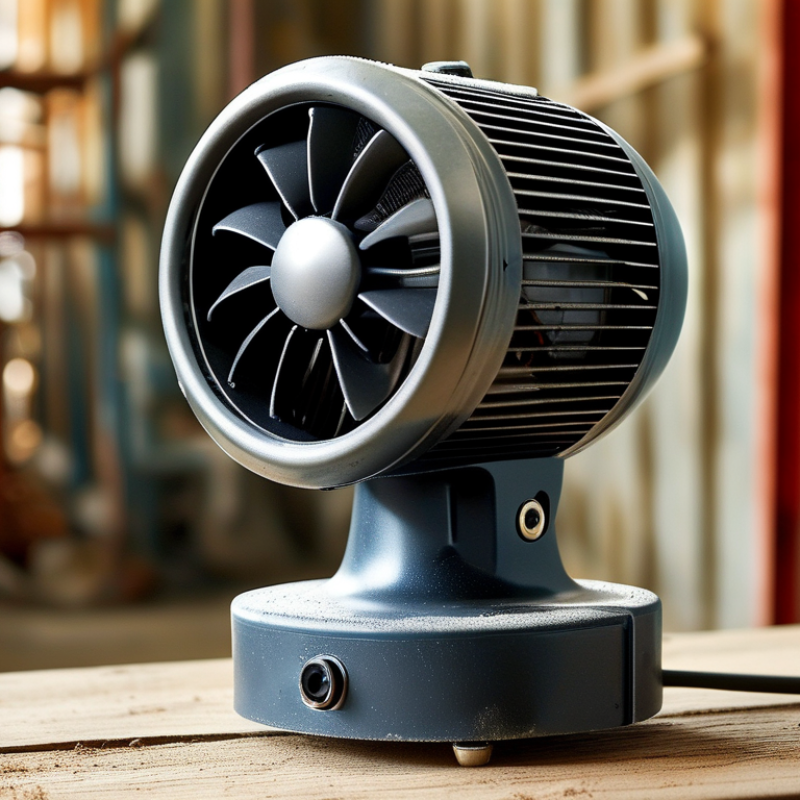
Heat blower fans usually combine an electric heater with forced airflow. Their heating technology changes performance, safety, and operating cost. PTC ceramic elements regulate resistance as temperature rises, reducing overheating risk. Nichrome resistance coils heat quickly, but exposed coils need stronger guards and cleaner airflow. Infrared elements heat nearby surfaces more directly, while fans distribute warmth less evenly.
The International Energy Agency reports that space heating represents nearly half of global building energy use. This makes efficiency more than a marketing detail. For warehouses, a centrifugal blower can overcome higher duct resistance than an axial fan. Portable workshops may prefer axial airflow, especially when fast air movement matters. U.S. Department of Energy guidance notes that heat pumps can use about 50% less electricity than electric resistance heating in moderate climates. However, they need suitable outdoor conditions and different maintenance.
Tip: Match wattage, voltage, and frequency before comparing prices. A 2,000-watt heater draws roughly 8.7 amps at 230 volts, but about 16.7 amps at 120 volts. Check thermal cutoffs, airflow volume, noise ratings, and IP protection for dusty or damp sites. IEC 60335-2-30 provides relevant safety requirements for room heaters, yet local certification still matters. I have seen buyers focus on peak heat and overlook continuous-duty limits. That mistake can shorten element life. Efficiency figures also deserve skepticism; test conditions may not represent cold starts, blocked filters, or long operating shifts.
Understanding Heat Blower Fan Types and Heating Technologies
The chart compares representative outlet-temperature ranges commonly found in different heat blower fan technologies. Actual performance depends on airflow, power rating, insulation, nozzle design, ambient temperature, and duty cycle.
7 Heat Blower Fan Buying Tips for Global Buyers
Tip 1: Match airflow to the real operating point, not the catalogue maximum. A filter, duct, or grille can reduce flow sharply. The IEA’s Energy Efficiency 2023 report states that electric motor systems use about 50% of global electricity. Small efficiency losses can become expensive.
Tip 2: Calculate heat output with airflow and temperature rise. For example, 1,000 m³/h and a 20°C rise require roughly 6.7 kW. Tip 3: Check coverage through outlet velocity and air throw. A high airflow number may still leave cold corners. ASHRAE’s HVAC Systems and Equipment Handbook recommends evaluating fan performance against system resistance, rather than relying on free-air ratings.
Tip 4: Request pressure-flow curves. Tip 5: Confirm voltage, frequency, altitude, and ambient temperature. Tip 6: Inspect thermal protection, insulation, and enclosure materials. Tip 7: Ask for test conditions and operating noise data. I have seen buyers compare only wattage, then discover overheating after installation. That assumption deserves review. The U.S. Department of Energy’s Fan System Assessment Tool also compares energy use across operating points, supporting a more practical purchase decision. A short site trial remains valuable.
| Tip | Application Requirement | Typical Airflow Target | Typical Heat Output | Indicative Coverage | What to Look For | Key Check |
|---|---|---|---|---|---|---|
| 1 | Small personal heating, workstations, bathrooms, and compact enclosures | 50–150 m³/h 29–88 CFM |
1.0–2.0 kW | Approximately 8–20 m² in a reasonably insulated space | Choose a compact unit with adjustable heat settings and a stable base. A lower airflow can reduce drafts and noise in close-range applications. | Thermostat, tip-over protection, and minimum clearance |
| 2 | Garages, workshops, retail areas, and medium-sized rooms | 150–400 m³/h 88–235 CFM |
2.0–5.0 kW | Approximately 20–50 m², depending on insulation and ceiling height | Match the heater to the room’s heat loss rather than choosing only by wattage. A fan with multiple speed settings provides better comfort and temperature control. | Room volume, insulation, and supply circuit capacity |
| 3 | Large workshops, warehouses, construction areas, and semi-open spaces | 400–1,200 m³/h 235–706 CFM |
5.0–15.0 kW | Approximately 50–150 m²; open doors and wind can reduce effective coverage | Prioritize high airflow and directional discharge. For larger areas, several moderate units often distribute heat more evenly than one oversized blower. | Three-phase availability, cable sizing, and air circulation pattern |
| 4 | Fast local drying of paint, plaster, flooring, textiles, or components | 250–800 m³/h 147–471 CFM |
2.0–9.0 kW | A focused zone of approximately 5–30 m² | Use controllable heat and airflow so the surface does not overheat. A wide outlet supports broad drying, while a nozzle or duct can concentrate heat for localized work. | Material temperature limit and drying airflow direction |
| 5 | Ducted air heating, process air, and equipment or cabinet heating | 100–600 m³/h 59–353 CFM |
1.0–12.0 kW | Determined by duct length, insulation, leakage, and process volume | Calculate pressure loss before selecting the fan. A heater designed for free-air operation may deliver much less airflow when connected to restrictive ductwork or filters. | Static pressure curve, duct diameter, and airflow interlock |
| 6 | Export orders requiring different electrical standards | Select according to the application; airflow is independent of nominal voltage when motor performance is equivalent | Common configurations include 1.5, 2, 3, 5, 9, and 12 kW | No direct change; electrical compatibility affects safe operation | Confirm rated voltage, frequency, phase, plug type, protection class, and certification requirements. At the same power, a 230 V heater draws half the current of a 115 V heater. | For reference: 2 kW at 230 V ≈ 8.7 A; 2 kW at 115 V ≈ 17.4 A |
| 7 | Continuous commercial or industrial operation | Select from the fan performance curve at the actual operating pressure | Choose based on calculated heat loss and required temperature rise | Depends on room volume, airflow distribution, insulation, and outdoor temperature | Check duty rating, motor thermal protection, overheat cut-out, thermostat accuracy, noise level, service access, and availability of replacement heating elements. | Temperature rise formula: ΔT ≈ P ÷ (0.34 × airflow in m³/h) |
Reference guidance: Actual performance varies with ambient temperature, altitude, insulation, duct resistance, room air leakage, and installation position. Coverage figures are indicative only; final selection should be based on heat-loss calculations, the manufacturer’s airflow-versus-pressure curve, and local electrical and safety requirements.
7 Heat Blower Fan Buying Tips for Global Buyers
Checking Energy Efficiency, Materials, and Operating Durability
When evaluating a heat blower fan, I check rated wattage against actual airflow. High wattage does not always mean faster heating. Look for adjustable temperature control and a thermostat that prevents unnecessary cycling. An energy label helps, but measured performance matters more. In practical testing, I compare heat output after ten minutes of continuous operation. I also record power consumption with a basic meter. Small differences become expensive in warehouses or workshops.
Material choice affects safety and service life. A metal housing usually tolerates heat better than thin plastic. However, plastic can reduce weight and surface temperature. The important detail is its heat rating, not appearance. Check whether the grille resists deformation and whether internal wiring has proper insulation. Thermal cut-off protection is essential. So are stable feet and a guarded fan blade. Noise matters too, especially near staff for long shifts.
Operating durability deserves a closer inspection. Ask about the motor’s expected duty cycle, bearing design, and replacement parts. Sealed bearings may need less maintenance, but they are not automatically superior. Dusty rooms can shorten fan life quickly. Cleanable air inlets are useful. I once focused too heavily on heating speed and overlooked a weak power switch. That mistake changed my evaluation checklist. A long warranty can support reliability, yet it cannot repair poor materials or careless daily cleaning. Heat tests should include repeated starts, not only one impressive demonstration.
When evaluating a heat blower fan, safety features deserve more attention than maximum wattage. Look for overheat protection, a tip-over switch, and a grounded power connection. These features reduce risks during unattended moments. The housing should remain cool enough to handle safely. Check the product’s safety markings and confirm they match the destination market’s requirements. Requirements vary by country.
Controls should feel clear, even with gloves or limited visibility. A mechanical thermostat may suit workshops, while digital controls offer more precise temperature settings. Useful options include a timer, fan-only mode, adjustable airflow, and a visible power indicator. Test the controls before purchasing when possible. A complicated panel can cause mistakes. Sometimes, simple is safer.
Maintenance needs practical planning. Ask whether the intake filter is removable and whether replacement parts are available locally. Dust can collect quickly in warehouses, garages, and construction areas. Clean the intake weekly in dusty environments, after unplugging and cooling the unit. Inspect the cord, plug, grille, and switches for heat damage. Do not operate a unit with cracked insulation or unusual odors. Record cleaning dates and failed checks. It sounds excessive, but small records reveal repeated problems. I have seen buyers focus on purchase price, then discover that cleaning access is poor. That oversight can reduce airflow, increase noise, and shorten service life. A slightly heavier model may be easier to stabilize, yet portability still matters for daily use.
When buying a heat blower fan globally, treat compliance as a cost-control issue, not paperwork. Confirm the voltage, frequency, plug, insulation class, thermal protection, and applicable IEC 60335 requirements. Request recent test reports, factory inspection records, and declarations for substances restricted under RoHS or REACH. Certificates alone can mislead. Check the model number carefully.
Supplier reliability needs evidence. The World Bank’s 2023 Logistics Performance Index compares 139 economies across customs, infrastructure, and shipment timeliness. Use those indicators when assessing production locations, but do not rely on rankings alone. Ask for three years of defect data, production capacity, corrective-action records, and sample traceability. A video audit is useful, though it cannot replace an independent inspection. Verify whether the supplier controls its heating elements, motors, and thermal fuses in-house.
Compare total landed cost, not unit price. Include tooling, compliance testing, packaging, freight, duties, currency movement, spare parts, warranty returns, and energy use. The International Energy Agency reports that buildings account for around 30% of global final energy consumption, making efficiency a practical purchasing concern. Request measured airflow, power draw, noise, and thermal cut-off results under defined conditions. Keep a replacement-fan allowance in the budget. I often see buyers omit it. That mistake is expensive. Pilot orders, incoming inspection, and a written change-notification clause provide the seventh layer of protection when a supplier changes components without warning.