

A failing blower motor can turn a comfortable room into a warm, noisy one. You may notice weak airflow, uneven temperatures, or a hum behind the furnace or air handler. This 2026 buying guide explains how to choose a Blower Motor For Ac Unit based on system compatibility, performance, and practical operating needs. It is designed to help homeowners ask better questions, not replace a technician’s diagnosis.
Start with the equipment label and existing motor specifications. Record the model number, voltage, horsepower, speed settings, and mounting details before comparing replacements. A variable-speed motor may offer smoother airflow, but it must match the control board and system design. A less expensive option can become a poor fit if wiring, rotation, or shaft dimensions differ. Small details matter.
Check the warranty, supplier support, and installation requirements, too. If the unit has a run capacitor, confirm its rating against the manufacturer’s specifications; not every motor uses the same setup. A technician can verify compatibility and identify other causes of low airflow, such as a clogged filter or blocked return. That distinction matters because replacing the motor alone may not solve the problem. Sometimes the evidence is incomplete, and that is worth admitting. The right choice depends on the equipment, not a product ranking alone. Use this guide to compare options carefully, understand the trade-offs, and make a more informed purchase.
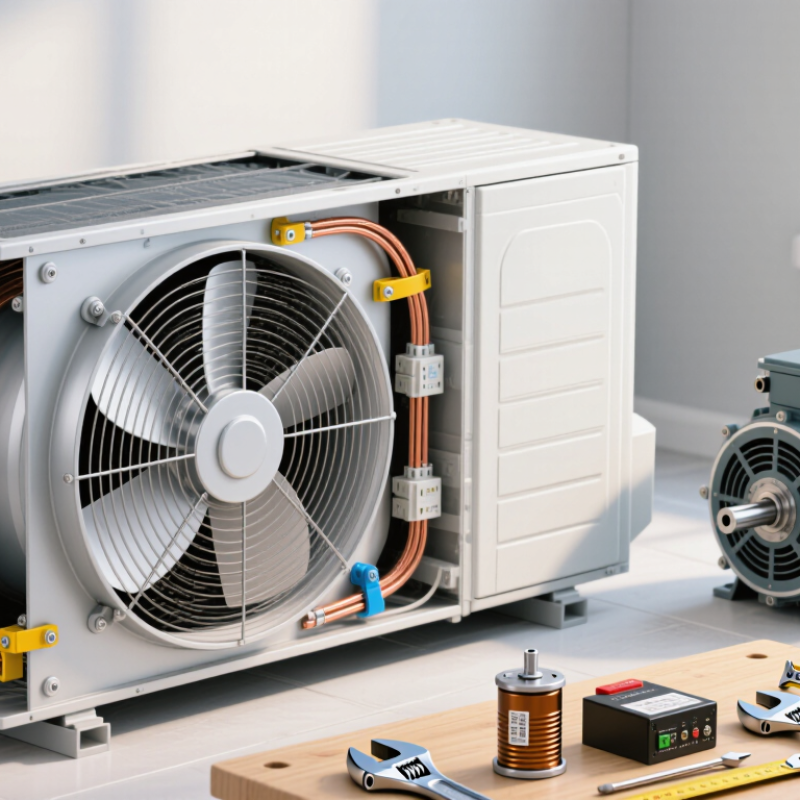
An AC blower motor drives the fan that circulates indoor air through your cooling system. The return grille draws warm room air into the air handler. The fan then pushes it across the cold evaporator coil, where heat is removed, and into the supply ducts. In practical terms, the motor helps move the cool air you feel at a vent.
The thermostat requests cooling, and the system’s controls signal the blower to run. Depending on the equipment, the motor may operate at fixed speeds or adjust its output to meet airflow needs. Some designs use a capacitor; others rely on electronic controls. These differences matter when choosing a replacement: voltage, mounting style, shaft dimensions, airflow capacity, and control type must match the equipment specifications. A motor that physically fits may still be incompatible.
Listen closely. Rattling, humming, or weak airflow can point to a motor problem, but they can also come from a clogged filter, dirty coil, or loose fan wheel. Diagnosis is not always obvious, even to an experienced technician. Before buying, check the unit’s data plate and service documentation, and have a qualified professional verify uncertain details. Disconnecting power is essential during inspection; electrical components can retain charge.
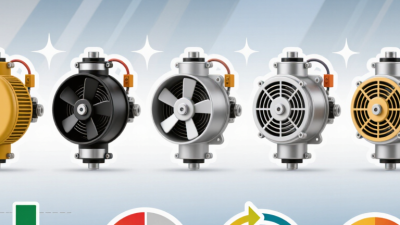
AC air handlers commonly use permanent split capacitor (PSC) motors or electronically commutated motors (ECMs). PSC motors run at set speeds, with airflow selected through wiring taps. They are straightforward to replace, but may use more electricity than efficient ECM options. Check the motor label, voltage, rotation, mounting, and capacitor rating before ordering. A similar-looking motor may still be incompatible.
ECMs include constant-torque and variable-speed designs. Constant-torque models adjust their output as duct resistance changes; variable-speed models can ramp airflow to meet programmed settings. That can mean gentler starts and quieter operation, but only when controls and system settings match. Not always. A restrictive filter or undersized duct can still cause poor airflow. Measure before replacing.
The U.S. Department of Energy’s 2014 furnace-fan standards analysis projected about 3.99 quadrillion Btu in cumulative energy savings over 30 years. The estimate concerns furnace fans, not every AC air handler, so it should not be treated as a motor-by-motor savings figure.
Source: DOE, Energy Conservation Standards for Residential Furnace Fans, 2014.
When comparing replacement motors, confirm required airflow and static pressure with the unit documentation; choosing by horsepower alone can leave rooms unevenly cooled.
Before comparing blower motors, record the air conditioner’s model details and the existing motor’s nameplate data. A motor can look identical yet differ in voltage, horsepower, rotation, or mounting dimensions. Match the rated voltage and motor type, such as an electronically commutated motor or a permanent split capacitor motor. Check shaft diameter, shaft length, mounting pattern, and rotation direction. Small mismatches matter.
Compare the rated speed and the blower’s required airflow, but do not judge performance by RPM alone. The fan wheel and duct resistance affect delivered airflow. Ask a qualified HVAC technician to check the system’s static pressure and airflow requirements against manufacturer specifications. A higher-horsepower motor is not automatically an upgrade. It may draw more power or strain components if the system is not designed for it.
For capacitor-driven motors, verify the required capacitor rating and confirm whether a capacitor is included. Also compare duty rating, operating temperature range, and sound levels if those details are available. ECM motors may offer more controlled airflow, but replacement and setup requirements can differ. Measure carefully. One overlooked connector or bracket can delay installation. I would recheck the nameplate before ordering; model labels can be faded, and online listings do not always show every dimension.
Typical airflow reference for residential air conditioners, using the common rule of thumb of approximately 400 CFM per ton.
Use airflow as an initial comparison point, not a motor-sizing guarantee. Required airflow varies by equipment and operating conditions. Before buying, confirm the replacement motor’s voltage, horsepower, speed, rotation, shaft dimensions, mounting, capacitor requirements, and compatibility with the unit’s airflow and static-pressure specifications.
A blower motor must match more than the space inside an AC cabinet. Check the unit’s data plate and service documentation for voltage, phase, horsepower, and rated RPM. Then compare the motor’s frame, shaft diameter, shaft length, mounting pattern, and rotation direction. Small differences matter. A shaft that is slightly too short may leave the blower wheel poorly seated, causing vibration or rubbing.
Confirm the motor type as well. A permanent split capacitor motor and an electronically commutated motor use different controls and are not simple substitutes. For a multi-speed motor, verify the correct speed tap and wiring against the system diagram. The selected speed affects airflow, and airflow affects comfort and coil performance. More horsepower does not automatically mean a better match.
Before ordering, compare the replacement specifications with the original motor and the AC manufacturer’s requirements. A similar-looking motor can still have incompatible electrical or mounting details. If the label is unreadable, record the unit model and motor dimensions, then ask a qualified HVAC technician to verify them. Disconnect power before inspection; capacitors can retain a charge. I have seen hurried measurements miss shaft length, so check it twice.
| Matching Factor | What to Check | How to Match the Motor | Common Examples and Important Notes |
|---|---|---|---|
| Motor type | Identify whether the installed motor is PSC, constant-torque ECM, or variable-speed ECM. | Choose the same motor technology and compatible control method. Confirm requirements in the air-handler or furnace documentation. | These motor types use different controls and wiring. A PSC motor is generally not a direct substitute for an ECM, or vice versa. |
| Voltage and phase | Read the motor nameplate and equipment wiring diagram for rated voltage and phase. | Match the required supply voltage and phase exactly; also check the equipment circuit and control connections. | Residential equipment commonly uses 115 V or 208–230 V single-phase motors. These are examples, not interchangeable ratings. |
| Horsepower and load | Check the motor nameplate for horsepower (HP) and, where listed, full-load amperage. | Use the specified rating for the equipment. Do not select a higher-HP motor as a substitute without confirming the blower and system requirements. | Residential blower motors may be rated, for example, 1/3, 1/2, or 3/4 HP. The correct value depends on the specific unit and airflow setup. |
| Speed and airflow control | Compare rated RPM, available speed settings, control taps, and the system’s airflow requirements. | Match the specified motor configuration and set airflow according to the equipment instructions and cooling capacity. | Motors with similar RPM ratings may deliver different airflow under load. Airflow also depends on the blower wheel, ductwork, filter, and static pressure. |
| Capacitor requirements | For a PSC motor, check the motor label for the required capacitance in microfarads (µF) and capacitor voltage rating. | Use the specified capacitance and an appropriate voltage rating. Follow the motor wiring diagram; ECM motors may not use a separate run capacitor. | Do not choose a capacitor by appearance or physical size. A wrong capacitance can cause poor performance or motor damage. |
| Rotation direction | Check the required rotation and how the direction is described in the motor documentation. | Confirm rotation from the stated viewing position, often the shaft end, and verify that the blower wheel moves air in the intended direction. | Some motors offer reversible rotation; others do not. Lead arrangements and rotation markings vary by motor design. |
| Frame, mounting, and shaft | Measure or verify frame size, mounting style, shaft diameter and length, and shaft-end configuration. | Match the replacement to the existing bracket and blower wheel. Confirm the shaft fits securely without contacting the housing. | A motor with the correct electrical rating may still be incompatible if its mount, shaft, or overall dimensions differ. |
| Blower wheel compatibility | Check wheel diameter, width, hub style, and position on the shaft. | Reuse a wheel only if it is undamaged and correctly sized for the replacement motor. Set the wheel position as specified by the equipment documentation. | A loose, dirty, or damaged wheel can cause noise, vibration, reduced airflow, and additional motor strain. |
| Electrical connections and controls | Review the wiring diagram, connector type, lead functions, and any control-board requirements. | Confirm that the replacement’s wiring and control interface match the equipment. Use the wiring diagram rather than relying on wire color alone. | ECM replacement setup may require specific programming, connectors, or an approved configuration procedure. |
| Operating conditions | Check the equipment’s specified temperature range, enclosure, and any required protection rating. | Select a motor intended for the installation environment and the duty required by the HVAC system. | Keep the motor and electrical components within the conditions stated in their documentation; protect them from moisture and debris where required. |
| Final verification | Compare the old motor nameplate, equipment model documentation, and replacement specifications before installation. | After installation, verify secure mounting, correct wiring, unobstructed airflow, and normal operation using the manufacturer’s procedure. | Disconnect power before service. If ratings, wiring, or compatibility are uncertain, consult a qualified HVAC technician. |
Buying tip: Use the air-handler or furnace model documentation and the existing motor nameplate as the primary references. Examples above are general; the equipment manufacturer’s specifications take precedence.
Before ordering a blower motor for an AC unit, compare the old motor’s voltage, horsepower, speed, rotation, shaft size, and mounting pattern. A motor that looks nearly identical may still turn the fan wheel the wrong way or fail to match the unit’s wiring. Check the equipment label and service documentation, then measure the motor and note each wire connection. Small differences matter. If details conflict, pause and ask a qualified HVAC technician to verify the match. Disconnect power before inspection; capacitors can retain a dangerous charge even after the system is switched off.
During installation, the fan wheel should sit securely on the shaft without rubbing the housing. Loose mounting bolts can create a low, steady vibration that grows louder over time. After startup, confirm smooth airflow and listen for scraping or humming. A quiet test matters. For maintenance, replace dirty filters and gently clear dust from accessible vents and the blower area. Avoid bending the wheel blades; even a small change can cause imbalance. Inspect for worn bearings, frayed wiring, and unusual heat. Sealed bearings generally should not be oiled. Maintenance notes can be imperfect, so record what you observe, including sounds and dates, rather than assuming every noise means the motor itself is failing.