Top 10 Exhaust Fan Motor Options for Your Business Needs?
The selection of an appropriate Exhaust Fan Motor can significantly impact operational efficiency in various industries. According to a report by the American Society of Heating, Refrigerating and Air-Conditioning Engineers (ASHRAE), improper ventilation can lead to a decrease in air quality by up to 50%, causing potential health issues for workers. Industry experts emphasize the importance of choosing the right motor for these systems. James H. Smith, a leading researcher in HVAC systems, states, “The right Exhaust Fan Motor not only improves air flow but also enhances energy efficiency.”
Selecting the correct Exhaust Fan Motor requires understanding specific business needs. Factors like airflow rate, energy consumption, and compatibility with existing systems play vital roles. A recent survey found that 65% of businesses saw increased energy costs due to inefficient fan motors. Investing in a high-quality exhaust solution is not just a need; it is a responsibility.
Yet, many companies overlook this essential component. The implications can be significant—rising costs, system failures, and employee dissatisfaction. Awareness and education about Exhaust Fan Motor options are crucial for businesses striving for optimal performance and sustainability. Choose wisely; your workspace's health depends on it.
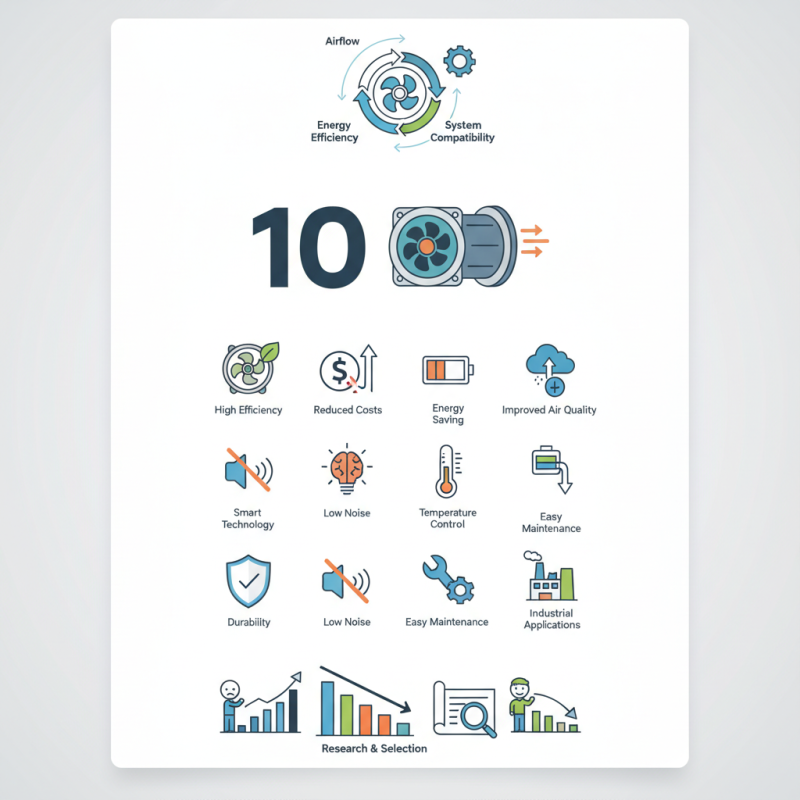
Top Considerations When Selecting Exhaust Fan Motors for Businesses
Selecting the right exhaust fan motor is crucial for business efficiency. Many factors influence this decision. One primary aspect is energy efficiency. According to the U.S. Department of Energy, energy-efficient motors can cut electrical costs by 20-30%. This can lead to significant savings over time, especially for businesses with high ventilation needs.
Another factor to consider is the ambient environment. Motors used in harsh conditions, such as manufacturing plants or chemical processing areas, require special features. For example, corrosion-resistant coatings and higher IP ratings enhance durability. A report by the National Electrical Manufacturers Association highlights that improper motor selection can result in up to 25% higher maintenance costs. Businesses often overlook these details, leading to unexpected repairs.
Noise level is often a neglected aspect. A quieter motor improves the working environment. Several studies indicate that lower noise levels can increase employee productivity by as much as 15%. However, businesses frequently compromise on sound ratings to save costs, potentially affecting workplace comfort. An informed decision balances cost, performance, and longevity. Understanding these factors enhances overall operational effectiveness.
Key Performance Metrics: Efficiency Ratings and Noise Levels of Motors
When selecting exhaust fan motors, two critical performance metrics emerge:
efficiency ratings and
noise levels.
Efficiency ratings are essential for understanding energy usage. High-efficiency motors can save businesses significant costs.
According to the U.S. Department of Energy, an efficient motor can consume up to 30% less energy than standard models.
For operations requiring prolonged use, this efficiency translates into substantial savings over time.
Noise levels are another essential consideration. Many industries require quiet operation to maintain a conducive environment.
The Air Movement and Control Association International reports that fan noise levels can vary significantly.
Motors with lower decibel ratings are preferable. For instance, a motor rated at 50 dB operates quietly,
comparable to a library. On the other hand, models exceeding 70 dB can disrupt the workflow.
While focusing on these metrics, it's vital to reflect on your specific needs. Some businesses may prioritize efficiency over noise.
Others might have stringent noise level requirements that could limit efficiency options. Balancing these aspects can be challenging.
Each scenario requires careful analysis to ensure the right fit for operational demands.
Industry Standards: Compliance and Safety Regulations for Exhaust Fan Motors
Exhaust fan motors play a crucial role in various industries. However, they must adhere to certain compliance and safety regulations. These regulations ensure that the fans operate efficiently and safely. Compliance with local and national standards is essential for all businesses. Non-compliance can result in serious consequences, including fines and safety hazards.
Understanding the industry standards is vital for selecting the right exhaust fan motor. Each motor type has specific testing criteria. These may relate to energy efficiency, noise levels, and overall performance. Often, businesses overlook these details, which can lead to problems. Proper evaluation of compliance documents is key to ensuring safety.
Lastly, while effective exhaust systems are essential, regular maintenance cannot be ignored. Motors require periodic checks to maintain performance and safety. Many businesses, however, underestimate the importance of this. A neglected motor can lead to inefficiencies and increased risks. Reflecting on maintenance routines is crucial to uphold safety and compliance standards.
Top 10 Exhaust Fan Motor Options for Your Business Needs
This chart illustrates the performance ratings of various exhaust fan motors based on their efficiency, noise level, and compliance with industry standards.
Cost-Benefit Analysis: Evaluating Long-Term Savings on Energy and Maintenance
Choosing the right exhaust fan motor for your business is crucial. A cost-benefit analysis can help you understand the long-term savings on energy bills and maintenance costs. While initial expenses can be high, the right motor can lead to significant cost reductions over time. Efficient models reduce energy consumption, which lowers operational costs.
Tips to consider include:
- Selecting models with variable speed settings to optimize energy use based on real-time needs.
- Regular maintenance; it ensures longevity and reduces unexpected repair costs.
- Pay attention to noise levels as well. A quieter motor can enhance comfort in work environments.
Reflect on the upfront costs versus the longevity benefits. Some options may seem more expensive initially but can be more reliable. Look for motors with extended warranties. These options often indicate durability and commitment from manufacturers to quality. Evaluating
energy efficiency ratings is another key factor in making a wise investment for your business.



 Email
Email Whatsapp
 WeChat