

The 2026 Canton Fair, renowned for its vast array of products, will highlight emerging trends in access valves. During this event, key innovations will surface, reflecting the industry's evolution. Access valves are crucial components in various applications, from manufacturing to healthcare, ensuring safety and efficiency.
As the fair introduces AI-driven features, suppliers offering access valves will gain visibility. Buyers can quickly find certified manufacturers. This enhances their purchasing experience. The focus on advanced manufacturing technologies signals a growth in demand for innovative access valves.
However, challenges remain. Limited awareness about valve specifications may hinder effective procurement. The need for education on product selection is essential. As the fair unfolds, industry stakeholders must work together, addressing gaps in knowledge. By doing so, they can better harness the full potential of access valves.

The 2026 Canton Fair showcased stunning innovations in access valve design. Industry experts highlighted their profound impact on efficiency and safety. Reports estimate a 15% rise in demand for advanced access valves by 2028. This is largely due to growing industry regulations focusing on sustainable practices.
One standout trend is the move toward smart access valves. These valves integrate sensors for real-time monitoring and control. Data indicates that smart valves can reduce energy consumption by up to 30%. However, challenges remain. The implementation costs can be high, limiting access for smaller manufacturers.
Another innovation is the shift towards eco-friendly materials. Lightweight composites are gaining traction. These materials enhance durability while reducing the carbon footprint. Nevertheless, the overall market adoption rate for these materials is still low. Many manufacturers hesitate to invest due to performance uncertainties. This creates a gap that innovators must address.
| Trend | Description | Innovative Feature | Market Demand |
|---|---|---|---|
| Smart Access Valves | Integration of IoT technology for remote monitoring. | Real-time data analytics capabilities. | High - due to automation trends. |
| Eco-friendly Materials | Use of recyclable and biodegradable materials. | Sustainability certifications. | Increasing - driven by regulatory standards. |
| Improved Seal Technology | Enhanced durability and leak prevention. | Self-sealing features. | Moderate - for industrial applications. |
| Modular Design | Customized valve solutions based on modular components. | Adaptability for different systems. | Growing - in diverse industries. |
| Advanced Coatings | Non-corrosive and wear-resistant coatings. | Enhanced longevity. | High - especially in harsh environments. |
| Compact Designs | Space-saving access valve designs. | Lightweight construction. | Increasing - in urban settings. |
| Automated Systems | Integration with automated control systems. | Remote operation capabilities. | High - due to smart factories. |
| Safety Features | Enhanced safety mechanisms for operations. | Automatic shut-off valves. | High - priority for compliance. |
| Data-Driven Solutions | Utilizing big data for predictive maintenance. | Predictive analytics integration. | Increasing - in tech-savvy industries. |
| Customizable Options | Tailored solutions for specific customer needs. | Personalized design features. | Moderate - as businesses seek unique solutions. |
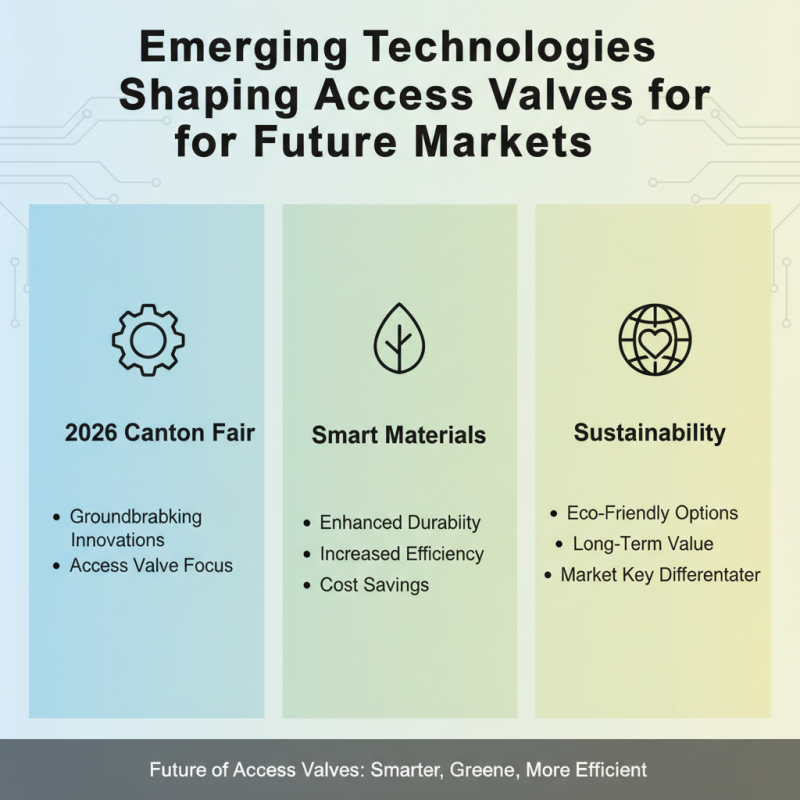
The 2026 Canton Fair is set to unveil groundbreaking innovations in access valves. Emerging technologies are shaping the future of these products. Smart materials are gaining attention. They promise enhanced durability and efficiency. Such materials could provide significant cost savings over time. Manufacturers may also focus on environmentally friendly options. Sustainability is becoming key in choosing access valves.
Digital solutions are becoming integrated into access valve designs. Remote monitoring capabilities are now possible. This can lead to improved maintenance schedules and reduced downtime. Additionally, automation in production lines is an ongoing trend. It aims to increase precision while lowering labor costs. However, challenges remain in ensuring quality control within automated processes.
While these advancements are promising, some gaps need addressing. Not all manufacturers can keep up with technological changes. Smaller companies may struggle to adopt new technologies. The importance of training staff cannot be overlooked. We must reflect on how to balance innovation with practical implementation. The future of access valves may hinge on this balance.
Sustainability is reshaping the access valve industry. Manufacturers are increasingly adopting eco-friendly materials. This trend is not just a choice; it is a necessity. Innovations in biodegradable plastics are emerging. These materials reduce landfill waste significantly.
Production processes are undergoing transformation too. Energy-efficient methods are being implemented. This lowers the carbon footprint associated with manufacturing. However, challenges remain. Some traditional methods are hard to replace swiftly. The transition requires time and investment.
Usage patterns are also evolving. Many industries are now prioritizing sustainable valves. They seek products that align with their environmental goals. This shift prompts manufacturers to rethink their designs. Some may need to reconsider raw material sourcing. Balancing cost and sustainability is tricky. Yet, it remains essential for future growth.
The 2026 Canton Fair is set to showcase dynamic trends in access valves. Key players will significantly influence these trends. Various segments within the industry, such as oil and gas, water treatment, and chemical processing, are evolving quickly. Recent reports indicate a projected growth rate of over 5% in the global access valve market from 2023 to 2028.
Innovative technologies are emerging from leading manufacturers. Digital monitoring and smart controls are becoming standard features. These advancements allow for better maintenance and efficiency. Interestingly, some companies are struggling to adapt to these changes. Failure to integrate modern technology can put manufacturers at a competitive disadvantage.
Sustainability is another critical focus. Environmental regulations are tightening. Companies face pressure to reduce emissions. Some have committed to using eco-friendlier materials in their products. However, the transition is not without challenges. Costs and supply chain issues are significant concerns. Addressing these complexities will shape the future of access valve trends at the fair.
The Canton Fair in 2026 showcased significant changes in consumer preferences for access valves. Attendees noted a noticeable shift towards eco-friendly products. Many visitors expressed interest in sustainable materials. The trend indicates a growing awareness of environmental impact among consumers. Showcasing such products boosted engagement at booths.
Another vital observation was the rise in demand for innovative designs. Traditional access valves are losing ground to smarter alternatives. Visitors were keen on features like ease of use and improved functionality. Some manufacturers struggled to keep up with this trend. Their designs felt outdated compared to newer models showcased at the fair.
Feedback from attendees highlighted the need for customization. Many buyers wanted valves tailored to specific applications. However, not all manufacturers are prepared to adapt. This gap could lead to missed opportunities in the market. Adapting to these changes may require reflection on current production methods and offerings.