Ultimate Tips for Choosing the Right Condenser Fan?
Choosing the right condenser fan is crucial for optimal performance in cooling systems. According to the American Society of Heating, Refrigerating and Air-Conditioning Engineers (ASHRAE), about 30% of energy used in commercial buildings is attributed to HVAC systems. Selecting the appropriate condenser fan can significantly impact this energy consumption.
Efficiency and reliability are key factors. Data from the U.S. Department of Energy indicates that more efficient fans can reduce energy costs by up to 50%. However, not all fans are created equal. Many users face challenges in making the right choice. Size, airflow, and noise levels can confuse even experienced professionals. It's essential to assess these criteria before making a purchase.
Furthermore, maintenance plays a vital role. Neglecting regular checks can lead to decreased performance. Some users underestimate this aspect, only realizing its importance when issues arise. Being well-informed about condenser fan specifications is essential for achieving lasting efficiency and reliability in your cooling systems.
Understanding the Function of a Condenser Fan in HVAC Systems
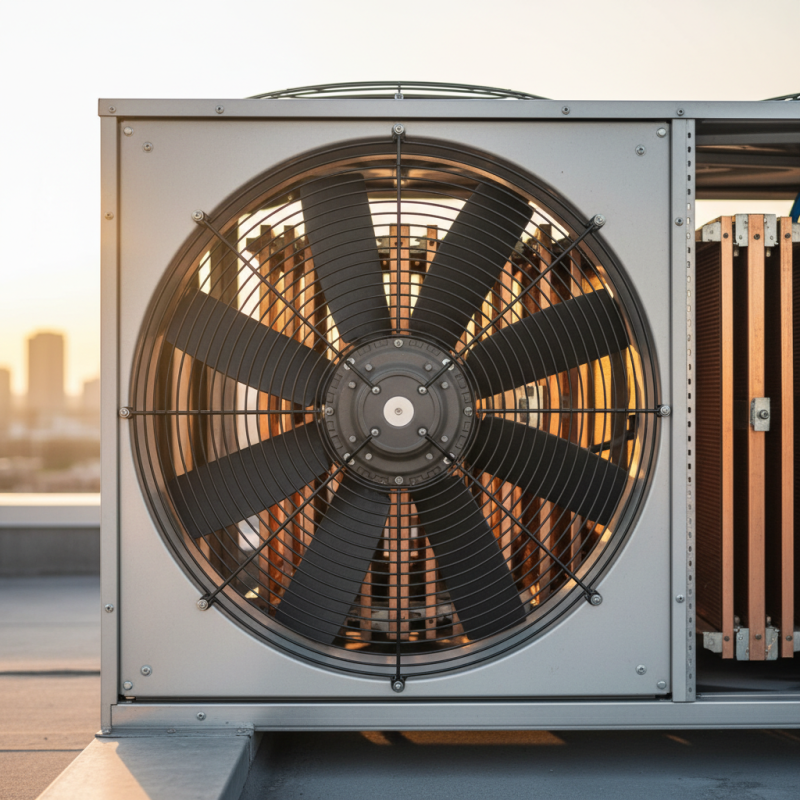
A condenser fan plays a crucial role in HVAC systems. It helps expel heat from the refrigerant. This enables the system to maintain efficient cooling. When the fan operates correctly, it can significantly enhance overall performance. However, if chosen poorly, the fan may fail to meet system requirements.
One common issue is the fan's size. If it’s too small, it cannot move enough air. This leads to overheating and decreased efficiency. On the other hand, a fan that’s too large can cause excessive noise. Therefore, understanding the specific needs of your system is key.
The material of the fan is also important. Metal fans generally last longer than plastic ones. However, they can add weight and be more challenging to install. Consider your environment as well. Humid or corrosive settings can affect fan longevity. Choosing a condenser fan is not a straightforward task. It requires knowledge and careful consideration.
Key Factors to Consider When Choosing a Condenser Fan
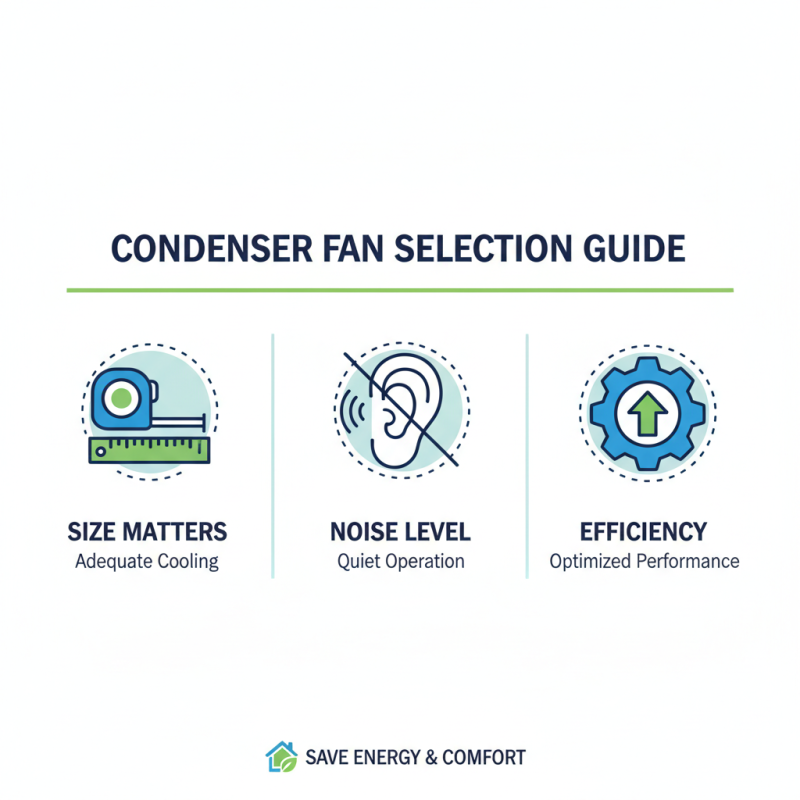
When choosing a condenser fan, several key factors come into play. The size of the fan is crucial. A fan that is too small won't provide adequate cooling, while one that is too large may waste energy. Measure your space carefully. Consider the noise level as well. Some fans can be quite loud, which may disrupt your environment. Look for a fan designed for quieter operation if noise is a concern.
Efficiency is another important factor. Energy-efficient models can save you money on utility bills. However, they may have a higher upfront cost. Calculate the return on investment before making a decision. Pay attention to airflow ratings as well. This indicates how well the fan can move air. A higher rating usually means better cooling performance.
Tips: Check for user reviews as they can provide insights into real-world performance. Don’t overlook installation requirements either; they can significantly affect your choice. Lastly, consider the maintenance aspects. Some fans require more upkeep than others. This might influence your long-term satisfaction.
Comparing Different Types of Condenser Fans: Pros and Cons
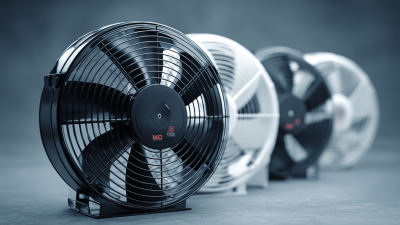
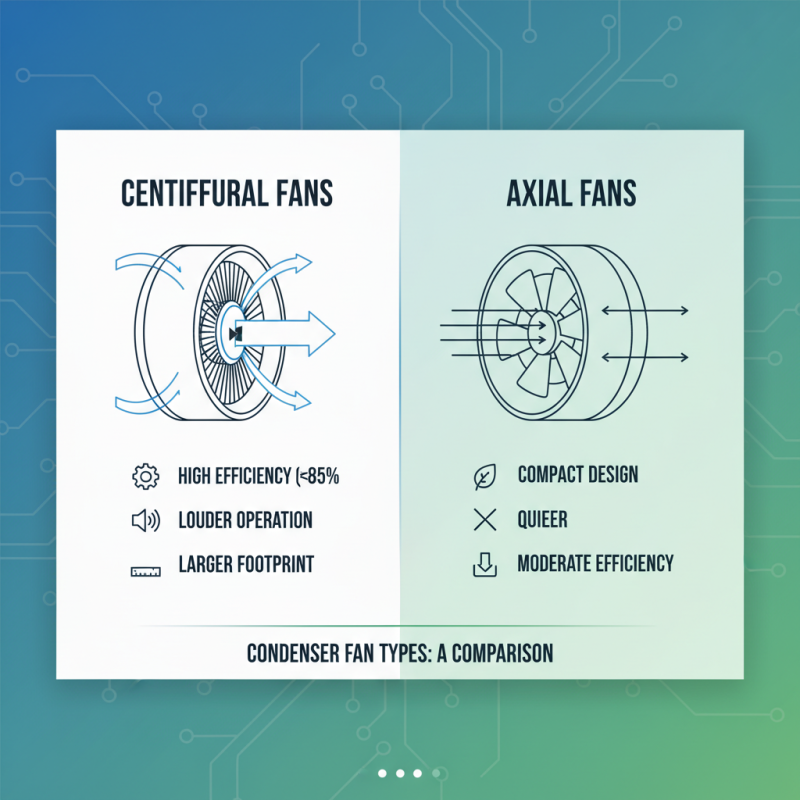
When choosing a condenser fan, it’s essential to compare different types, as each offers unique advantages and drawbacks. Centrifugal fans are commonly used in larger systems. They provide high efficiency, often exceeding 85% under optimal conditions. However, they can be louder and require more space for installation.
On the other hand, axial fans are compact and quieter. They work well in smaller setups and have a simpler design. Their efficiency can drop below 70% as compared to centrifugal fans. A report by the American Society of Heating, Refrigerating and Air-Conditioning Engineers indicates that axial fans might struggle with high static pressure applications. This can lead to inadequate cooling in some scenarios.
Consider the specific needs of your system. The wrong choice can result in performance issues. A fan that fails to meet airflow requirements can lead to overheating. It’s crucial to assess your installation space. Some fans might not fit well in tight spots. Balancing noise, efficiency, and space constraints can be challenging but vital for optimal operation.
Tips for Evaluating the Efficiency and Performance of Condenser Fans
When evaluating the efficiency of condenser fans, start by assessing airflow. Check the cubic feet per minute (CFM) rating. Higher CFM indicates better airflow. A fan with low CFM may struggle in larger spaces. It's essential to match CFM to the area size for optimal cooling.
Next, consider energy consumption. Look for fans that promote energy efficiency. A fan that uses excessive power may incur high costs over time. Sometimes, a cheaper option can lead to increased expenses due to inefficiency. Keep an eye on energy ratings to ensure you make a wise choice.
Noise level matters too. A loud fan can disrupt your environment. Measure the decibels (dB) produced. It's easy to overlook noise, but a quieter model can enhance comfort. Don't forget to check construction quality. Well-built fans may perform better and require less maintenance over time.
Maintenance Best Practices for Extending the Life of Your Condenser Fan
Regular maintenance is crucial for extending the life of your condenser fan. Statistics show that 70% of mechanical failures stem from lack of proper upkeep. Routine inspection ensures early detection of issues. Keeping the fan blades clean enhances airflow efficiency. Even a thin layer of dust can reduce performance significantly.
Lubrication is another key aspect. A well-lubricated motor can last up to 50% longer. However, over-lubrication can cause wear instead of preventing it. Regularly check capacitor connections and electrical components too. These are often overlooked but are fundamental for operational reliability.
Vibration is a common issue in condenser fans. Excessive vibration can lead to faster wear on components. Consider installing vibration isolators. They're simple yet effective tools. Keeping your fan operating smoothly can save costs in the long run. Remember, neglecting basic maintenance can lead to major repairs. This not only disrupts service but also incurs unnecessary expenses.
Ultimate Tips for Choosing the Right Condenser Fan
| Aspect |
Recommendation |
Maintenance Best Practices |
Expected Lifespan (Years) |
| Fan Size |
Choose a fan size that matches your condenser specifications |
Regularly clear debris and ensure adequate airflow |
5-10 |
| Blade Material |
Opt for corrosion-resistant materials |
Inspect blades for wear and tear |
7-12 |
| Fan Speed Control |
Select models with variable speed settings |
Regularly calibrate speed settings |
8-15 |
| Energy Efficiency |
Look for ENERGY STAR rated fans |
Perform routine energy audits |
10-20 |
| Noise Level |
Choose fans with sound-dampening features |
Monitor noise levels during operation |
5-10 |



 Email
Email Whatsapp
 WeChat