Leave Your Message

What Is an Inline Air Dryer and How Does It Work?

Compressed air may look clean as it leaves a hose, yet moisture can remain invisible inside the line. When warm, humid air cools, that vapor may condense into droplets. Those droplets can corrode pipework, damage pneumatic tools, and disrupt paint or packaging processes. Small problems, sometimes.

An Inline Air Dryer is installed within a compressed-air system to reduce moisture before air reaches equipment. Its exact method depends on the design. Refrigerated models cool the air so water vapor condenses and can be drained. Desiccant models use moisture-attracting material to dry the air further, while membrane units separate some water vapor from the flow. These approaches are not interchangeable, and each has operating limits.

This guide explains where an inline dryer fits, how its drying process works, and what its specifications mean in daily use. Airflow demand, inlet temperature, pressure, and the required pressure dew point all affect performance. A unit sized only by pipe diameter may not provide enough drying capacity. That detail is easy to miss. An air dryer also does not automatically remove oil or solid particles; separate filtration may be needed. Check the manufacturer’s data and drain requirements before installation, then monitor pressure drop and moisture downstream. The right choice depends on the application, not simply the smallest or most powerful unit. Even careful selection deserves review as operating conditions change.
What Is an Inline Air Dryer and How Does It Work?

What an Inline Air Dryer Removes: Water Vapor in Compressed-Air Systems

What Is an Inline Air Dryer and How Does It Work?
What an Inline Air Dryer Removes: Water Vapor in Compressed-Air Systems

Compressed air often carries water vapor from the surrounding air. As air cools inside pipes, that vapor can condense into droplets. Moisture may then cause corrosion, damage pneumatic tools, or affect the finish of sprayed materials. An inline air dryer sits within the compressed-air line and reduces this moisture before air reaches sensitive equipment. The air may look clear, but invisible vapor can still be present.

Dryer designs work in different ways. Refrigerated units cool the air so moisture condenses and can be drained. Desiccant units attract moisture, while membrane units separate some water vapor from the airflow. Each method lowers the air’s dew point, but no dryer makes air perfectly dry in every condition. Performance depends on airflow, inlet temperature, pressure, and maintenance. I’ve seen moisture issues blamed on a dryer when a blocked drain was the real cause. It is an easy detail to miss.

Tips: Check the dryer’s rated flow and pressure against your system. Drain collected condensate regularly, and monitor dew point where air quality matters. If water still appears downstream, inspect pipe cooling and drain operation before replacing equipment. A small temperature change can matter.

How Air Flows Through the Dryer: Cooling, Separation, and Moisture Removal

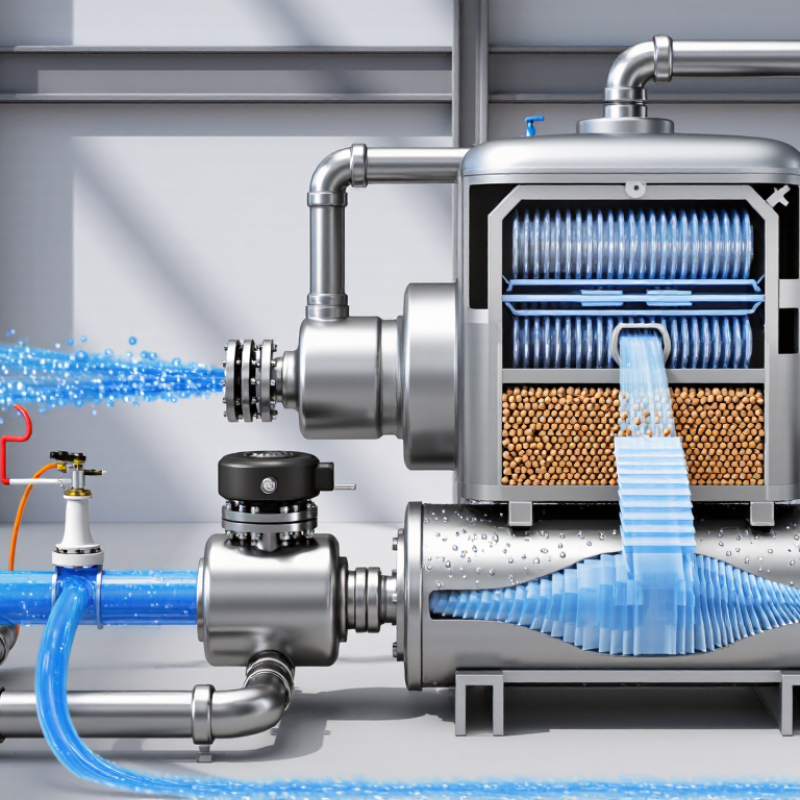
Compressed air enters the dryer warm and carries water vapor from the intake and compression process. In a refrigerated design, a heat exchanger cools the air. Heat leaves the air. As its temperature drops, some vapor condenses into liquid water. The exact amount depends on inlet temperature, pressure, and airflow.

The cooled air then passes through a separator, where droplets collect and fall into a sump. Water collects below. An automatic drain releases the condensate, while a coalescing filter may catch finer droplets or oil aerosols. These parts do different jobs: cooling turns vapor into liquid, and separation removes that liquid from the airflow. A clogged drain can let water travel downstream, so it deserves regular checks.

Many dryers warm the air slightly before it exits, reducing pipe sweating while keeping the air dry. In practice, airflow diagrams make this process look tidier than it can be. Sudden demand, dirty heat-transfer surfaces, or a failing drain may reduce performance. I would not assume that clear-looking outlet air is dry enough; check the specified pressure dew point and monitor the system under its normal load.

What Is an Inline Air Dryer and How Does It Work? - How Air Flows Through the Dryer: Cooling, Separation, and Moisture Removal

Airflow stage What happens to the air Moisture behavior Typical result or operating note
1. Warm, wet compressed-air inlet Compressed air enters the dryer after compression and often after an aftercooler. Its temperature and water-vapor content depend on the compressor, ambient conditions, and upstream equipment. Water is present as vapor; any cooling that brings the air below its pressure dew point can turn some vapor into liquid. Inlet conditions are installation-specific, so dryer capacity should be checked against the actual pressure, temperature, and flow.
2. Initial cooling The dryer cools compressed air in a heat exchanger, commonly using a refrigeration circuit in a refrigerated dryer. As the air cools, its ability to hold water vapor decreases and some moisture condenses into liquid water. Cooling creates condensate; it does not, by itself, remove liquid water from the airstream.
3. Condensate separation An internal separator, often using a change in airflow direction or centrifugal action, separates liquid droplets from the cooled air. Separated liquid collects in a sump or drain area rather than continuing downstream as droplets. Separation efficiency depends on equipment design and operating conditions; a functioning condensate drain is essential.
4. Automatic condensate drainage A float, electronic, or timed drain discharges collected liquid from the dryer without intentionally venting a continuous stream of compressed air. Liquid water and any accumulated contaminants are removed from the system at the drain point. A blocked or failed drain can allow liquid carryover; drains require inspection and maintenance.
5. Final cooling and moisture reduction In a refrigerated dryer, air is cooled to a controlled temperature that supports further condensation and separation. More water vapor condenses and is removed as liquid. Water vapor remains in the air; refrigerated dryers do not normally produce completely dry air. Many refrigerated compressed-air dryers are designed for a pressure dew point around +3°C (about +38°F), subject to the model and operating conditions.
6. Air-to-air reheating Many dryers pass outgoing dry air through a heat exchanger to warm it using incoming air before it leaves the unit. Reheating does not remove additional water; it lowers the relative humidity of the air at its outlet temperature. The pressure dew point is not improved by reheating alone, although warmer outlet air can help reduce downstream condensation risk.
7. Dry-air outlet Treated compressed air exits the dryer and continues through the distribution system to its point of use. The air contains less moisture than at the inlet, but its remaining water-vapor level is represented by its pressure dew point. Select the dryer’s pressure-dew-point performance for the application; lower dew points generally require a different drying method, such as desiccant drying.

Note: This describes a typical refrigerated compressed-air dryer. Exact airflow paths, temperatures, pressure losses, and dew-point performance vary by dryer design and operating conditions.

Refrigerated Dryers and the +3°C Pressure Dew Point of ISO Class 4

An inline air dryer removes moisture from compressed air before it reaches tools, valves, or process equipment. Refrigerated models cool the air until water vapor condenses, then separate and drain the liquid. The air is reheated before leaving the dryer, which helps prevent sweating in downstream pipes. Simple, but not magic. A blocked drain or overloaded unit can let moisture pass through.

The important figure is the pressure dew point: the temperature at which water vapor condenses while the air remains under pressure. A refrigerated dryer is commonly selected to meet ISO 8573-1 water Class 4, which specifies a pressure dew point of +3°C or lower. That rating is not the dryer’s outlet-air temperature. It is a moisture-performance limit. If a downstream pipe or component becomes colder than the actual dew point, water can still form. Check the dryer’s rated flow, inlet temperature, operating pressure, and ambient conditions against the real installation. It is easy to treat a catalogue rating as a guarantee. It isn’t. Periodic checks of the condensate drain and dew point help confirm the system is doing its job. A little uncertainty remains: changing loads and hot inlet air can affect performance, so sizing deserves care.

Inline Air Dryers and ISO 8573-1 Pressure Dew Point Classes

An inline refrigerated air dryer cools compressed air so water vapour condenses and can be drained away. Refrigerated dryers commonly target a pressure dew point near +3°C. Under ISO 8573-1, a pressure dew point of +3°C is the maximum for water Class 4.

Bars show the maximum pressure dew point for each water class; lower temperatures indicate drier compressed air. These are ISO class limits, not measured dryer results. Actual performance depends on operating conditions and system design.

Desiccant Dryers and ISO Class 2 (−40°C) or Class 1 (−70°C)

An inline air dryer removes water vapor from compressed air near the equipment or process that needs dry air. For demanding applications, a desiccant dryer uses porous material to adsorb moisture as air passes through a drying tower. A second tower may regenerate its desiccant with purge air or heat. The handoff matters. Poorly timed switching can let moisture slip downstream.

The target is often stated as pressure dew point, not ordinary room temperature. ISO 8573-1:2010 sets water-vapor limits of −40°C or lower for Class 2 and −70°C or lower for Class 1. These figures describe the compressed air’s pressure dew point. Class 1 is therefore much drier, but it generally requires more drying effort and careful control. Colder isn’t automatically better.

A practical setup may include a moisture separator and prefilters to protect the desiccant from liquid water, oil, and particles. Check the dryer’s outlet dew point under real flow conditions, not only at an ideal test rate. The U.S. Department of Energy’s Improving Compressed Air System Performance guide recommends treating air quality as part of system design and maintenance. A small caveat: sensor readings can drift, and a displayed setpoint does not prove every branch line stays dry. That detail is easy to miss.

How to Check Dryer Performance: Pressure Dew Point and ISO 8573-1 Class

What Is an Inline Air Dryer and How Does It Work?

An inline air dryer reduces moisture as compressed air passes through the system. Its performance is best checked by measuring pressure dew point (PDP), the temperature at which water vapor begins to condense at operating pressure. A low PDP means drier air. Small changes matter when air feeds instruments, paint equipment, or cold piping.

Measure near the dryer outlet after the system reaches a steady flow. Use a calibrated dew-point meter and keep the sample line clean, leak-free, and close to operating pressure. ISO 8573-1 assigns water-purity classes using PDP limits: Class 4 allows up to +3°C, while Class 2 allows up to −40°C. These values describe water only; they do not confirm particle or oil classes. One reading can mislead if the compressor load or inlet humidity changes. That detail is easy to overlook.

Tips: Record pressure, flow, and PDP together. Compare readings under similar conditions, and check the sensor’s calibration date. If results drift, inspect the drain and filters before assuming the dryer has failed.