How to Choose the Right Furnace Fan Motor for Your Home?
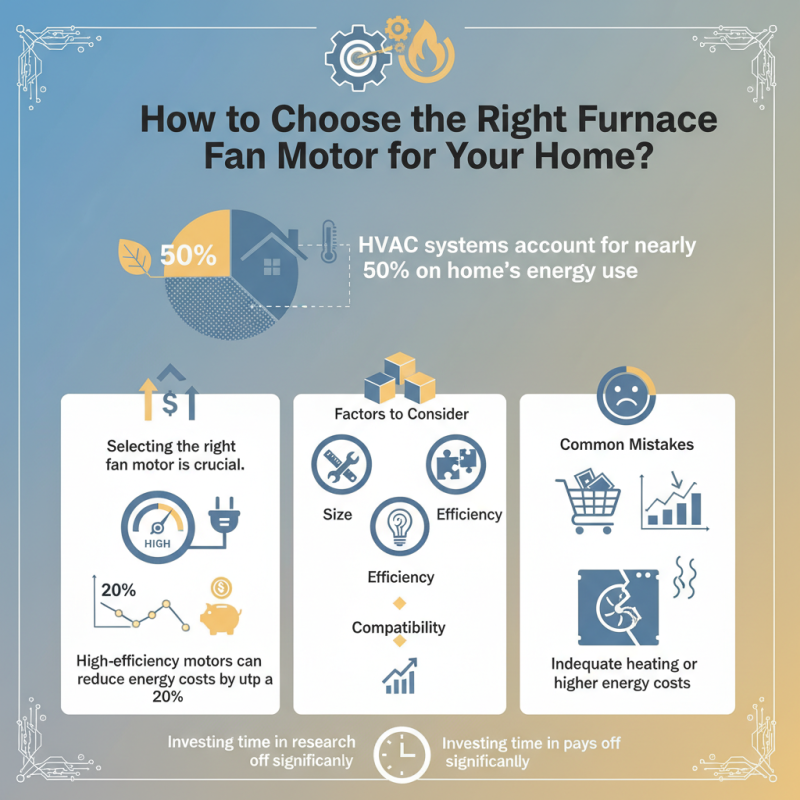
Selecting the right furnace fan motor is crucial for your home's heating efficiency. A furnace fan motor significantly impacts energy consumption. According to the U.S. Department of Energy, HVAC systems account for nearly 50% of a home's energy use. Choosing the appropriate motor can enhance comfort and lower energy bills.
Many homeowners overlook the importance of furnace fan motors. Some may choose a motor based solely on price, neglecting efficiency ratings. A study by ASHRAE suggests that high-efficiency motors can reduce energy costs by up to 20%. This choice affects not just comfort, but also the lifespan of the entire HVAC system.
When choosing a furnace fan motor, consider factors like size, efficiency, and compatibility. It’s easy to make mistakes if you rush the decision. The wrong motor can lead to inadequate heating or higher energy costs. Investing time in research pays off significantly in the long run.
Understanding Furnace Fan Motors and Their Functions
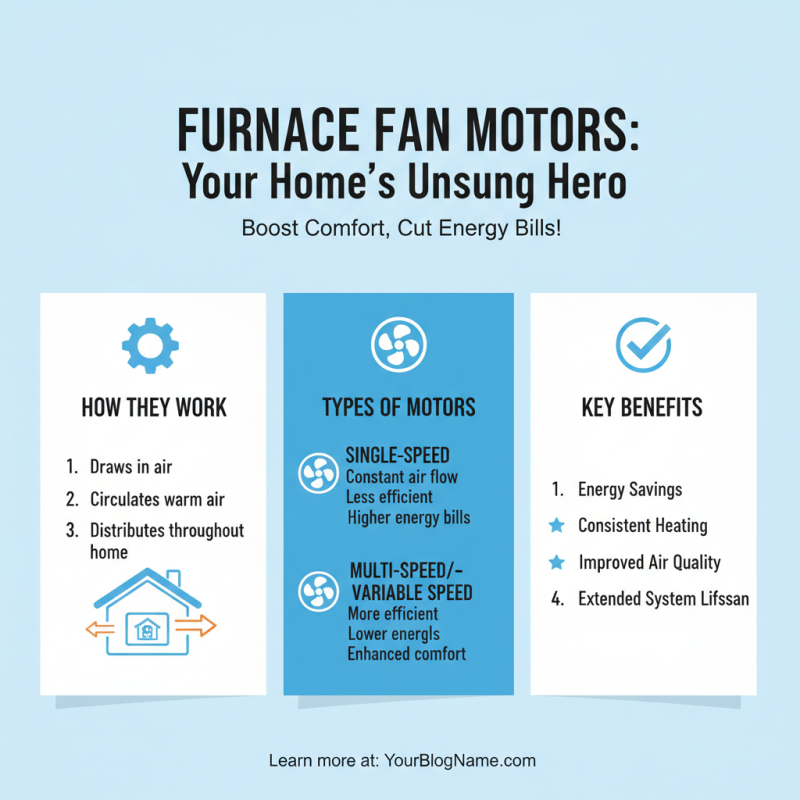
Furnace fan motors play a crucial role in maintaining a comfortable indoor environment. They circulate air through the heating system, ensuring that warm air reaches every corner of your home. The efficiency of these motors can significantly influence your energy bills and overall comfort.
According to industry studies, nearly 70% of homeowners report higher energy costs due to outdated or inefficient fan motors. The right motor can cut energy consumption by as much as 20%. It's essential to consider factors like horsepower, size, and efficiency ratings when selecting a motor. Many fans are designed for specific furnace models, emphasizing the need for compatibility.
In addition to efficiency, consider the type of motor. Some systems use permanent split capacitor (PSC) motors, which are known for their simplicity and reliability. Others may feature variable speed motors, offering flexibility in airflow control. Balancing performance with potential drawbacks, like noise levels, is vital. Homeowners often overlook the importance of a quiet operation, which impacts daily comfort levels. It's all about finding the right balance for your unique situation.
Identifying the Right Size for Your Furnace Fan Motor
Choosing the right size for your furnace fan motor can be challenging. Many homeowners struggle with this decision. The motor's size impacts efficiency and comfort. A motor that is too small will overwork and wear out quickly. Similarly, a motor that is too large may cycle on and off frequently. This can lead to inconsistent heating and higher energy bills.
To determine the right size, consider airflow requirements. Typically, this depends on your home's square footage and layout. Measure your space accurately. Make detailed notes of any obstacles that might hinder airflow. You might need to consult charts or guidelines. This can sometimes feel overwhelming.
Don't hesitate to seek advice from a professional. They can provide valuable insights into your specific needs. Some people rush this step, but that can lead to regrets. An improperly sized motor may lead to inefficient heating over time. That's not what you want for your home. Take your time, and get it right.
Choosing the Right Furnace Fan Motor Size
This bar chart illustrates the recommended sizes for furnace fan motors based on home size. As the home size increases, the required motor size in watts also increases, ensuring optimal heating efficiency.
Evaluating Efficiency Ratings: SEER and AFUE Explained
When choosing a furnace fan motor, efficiency ratings play a vital role. SEER, or Seasonal Energy Efficiency Ratio, measures cooling efficiency. It's essential for air conditioning systems, indicating how much cooling a unit provides per dollar spent. A higher SEER means better energy savings. However, many homeowners overlook this factor when selecting a furnace motor.
AFUE, or Annual Fuel Utilization Efficiency, is another crucial rating. It shows how effectively a furnace converts fuel into heat. For example, an AFUE of 90% means that 90% of the fuel is used for heating. This leaves only 10% wasted. Some furnaces, however, may not even reach this standard. Be cautious. Not all ratings are directly comparable; factors like climate affect performance too.
Understanding these ratings guides smart choices. Efficiency can lead to lower utility bills. Yet, not all high-rated options are suitable. Consider your home’s specific needs. Balance initial costs with long-term benefits. A furnace might seem efficient but could fall short in your environment. Reflect on these details for optimal comfort and savings.
Considering Noise Levels and Motor Types
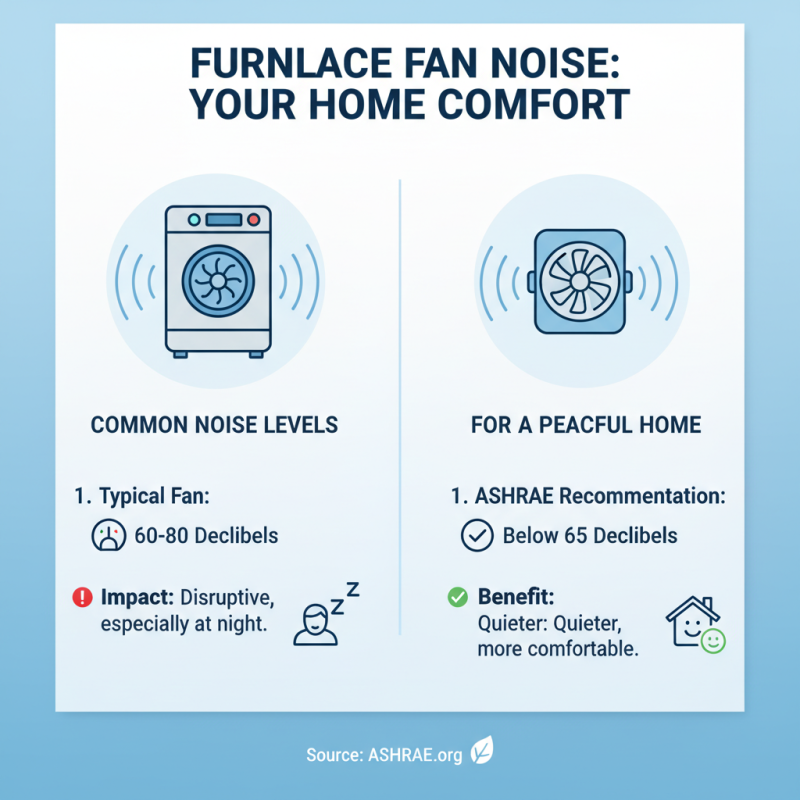
When selecting a furnace fan motor, noise levels are often a key concern. Many homeowners don't realize that noise can impact overall comfort. For instance, a typical furnace fan can produce sound levels ranging from 60 to 80 decibels. This noise can be disruptive, especially in quiet homes or during nighttime. According to the American Society of Heating, Refrigerating and Air-Conditioning Engineers (ASHRAE), a quieter motor is generally more desirable. They recommend looking for models with a decibel rating below 65 for a more peaceful environment.
Motor types also play a significant role in noise production. Brushless DC motors are known for their quieter operation compared to traditional AC motors. These motors are often more efficient, reducing energy costs. While the initial investment might be higher, the long-term savings can offset the cost. Reports show that brushless motors can reduce operational noise by up to 30%. However, some users might find the transition to these more advanced models challenging. It’s essential to weigh the advantages against your comfort with technology.
In some cases, users overlook the importance of proper installation. Even the quietest motor can become loud if not installed correctly. Vibration can amplify noise levels, sometimes turning a well-rated motor into a nuisance. Homeowners should consider professional installation if unsure about doing it themselves. This small step can significantly enhance the quiet operation of a new furnace fan motor.
Assessing Budget and Manufacturer Warranties
When choosing a furnace fan motor, budget is crucial. Research suggests that homeowners can spend anywhere from $100 to $600 for a new motor. This range depends on factors like efficiency and power. A more efficient motor may cost more upfront. However, it can save money in the long run due to lower energy bills.
Manufacturer warranties also play a key role in your decision. Most quality motors come with warranties ranging from one to five years. A solid warranty can indicate a reliable product. It protects against potential issues. Reports show that nearly 25% of homeowners experience motor failures within five years. Thus, a good warranty is essential for peace of mind.
Many people overlook these details. They focus only on the initial cost. This can lead to higher long-term expenses. Consider the total cost of ownership. Assess efficiency ratings. Look for reviews and ratings. After all, your choice impacts comfort and energy use in your home. Making the right decision is vital for long-term satisfaction.
How to Choose the Right Furnace Fan Motor for Your Home? - Assessing Budget and Manufacturer Warranties
| Motor Type |
Power (HP) |
Efficiency (%) |
Warranty (Years) |
Price Range ($) |
| Blower Motor |
1/4 |
85% |
3 |
150 - 250 |
| Direct Drive Motor |
1/3 |
90% |
5 |
200 - 350 |
| Variable Speed Motor |
1/2 |
95% |
7 |
300 - 500 |
| EC Motor |
3/4 |
97% |
10 |
400 - 700 |



 Email
Email Whatsapp
 WeChat