How to Choose an Attic Fan Motor for Optimal Airflow and Efficiency?
Choosing the right attic fan motor is crucial for maximizing airflow and efficiency in residential spaces. A well-functioning attic fan reduces heat buildup, particularly during the summer months, which can lead to energy savings. According to the U.S. Department of Energy, proper ventilation can save homeowners up to 20% on cooling costs. However, many homeowners overlook the importance of selecting an optimal motor for their attic fans.
An attic fan motor needs to strike a balance between power and efficiency. Motors with high CFMs (cubic feet per minute) ratings can enhance airflow, yet they often consume more energy. The challenge lies in identifying a motor that meets both performance and energy-efficiency standards. Moreover, industry reports suggest that selecting an ENERGY STAR-rated motor can reduce home energy consumption by an additional 30%.
It's essential to consider not just the motor's specs but also the compatibility with the existing ventilation system. Some homeowners have reported issues due to mismatched components. As such, investing time in understanding varying motor types and their features can lead to more informed decisions. Ultimately, choosing the right attic fan motor can yield significant benefits, but it requires careful evaluation of all factors involved.
Factors to Consider When Selecting an Attic Fan Motor
Choosing the right attic fan motor can greatly improve airflow and energy efficiency. It is essential to consider several factors when making your selection. Start by assessing the attic size to determine the motor power you need. A larger space may require a more powerful motor to ensure effective ventilation.
Also, think about the airflow rate, measured in cubic feet per minute (CFM). Higher CFM ratings usually indicate better airflow. However, efficiency matters, too. Select a motor that balances power with energy usage. Look for options that have Energy Star ratings, as they meet specific efficiency criteria. This choice can save money on energy bills over time.
Tips: Pay attention to noise levels as well. Some motors operate quietly, while others can be quite loud. A noisy motor can disrupt your home’s comfort. Additionally, consider the installation process. Some motors are more complex to install, while others offer straightforward setups.
Reflect on your preferences and requirements. Are you opting for a specific design? Budget constraints may affect your decision, but investing in a quality motor pays off in the long run. Proper choices lead to lasting comfort in your home.
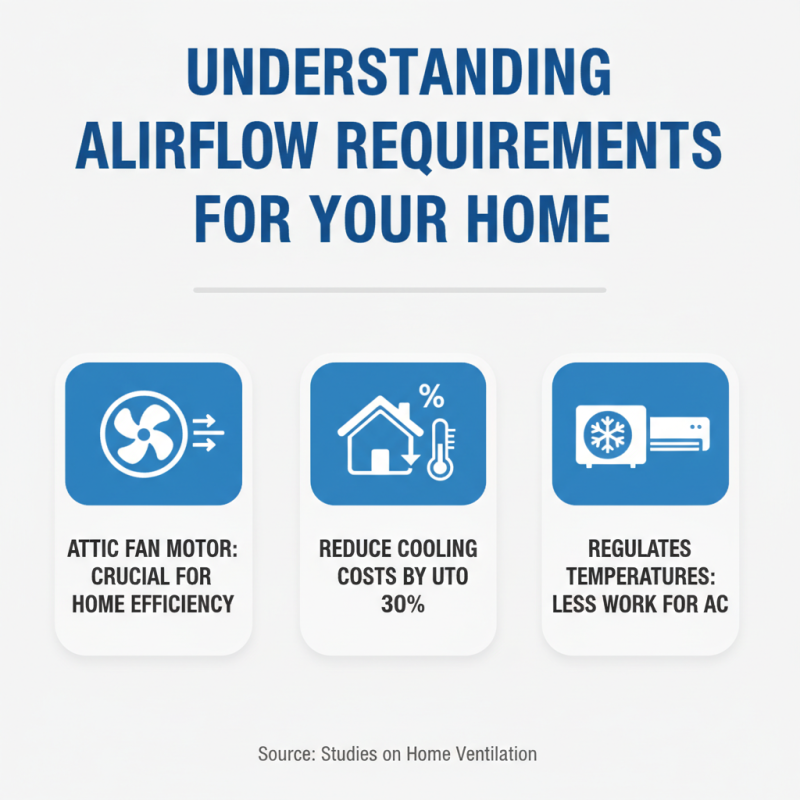
Understanding Airflow Requirements for Your Home
When selecting an attic fan motor, understanding airflow requirements is crucial for home efficiency. Studies indicate that a well-ventilated attic can reduce cooling costs significantly, sometimes by up to 30%. An efficient attic fan helps regulate temperatures, ensuring your air conditioning system doesn’t work overtime.
Consider the size of your attic. Larger spaces require more airflow. Generally, it’s recommended to have around 1 square foot of vent area for every 300 square feet of attic space. This ratio aids in keeping air fresh and minimizes humidity buildup. According to the American Society of Heating, Refrigerating and Air-Conditioning Engineers (ASHRAE), this is vital for preventing structural damage caused by excess moisture.
Moreover, think about the fan's speed and noise level. Many homeowners neglect noise, focusing solely on airflow. A fan that is too loud can disrupt your peace. Balancing airflow with acceptable noise levels is necessary. Additionally, while efficient motors exist, some may not provide the airflow your specific attic needs. Assess your unique space to find a suitable solution.
Evaluating Energy Efficiency Ratings for Fan Motors
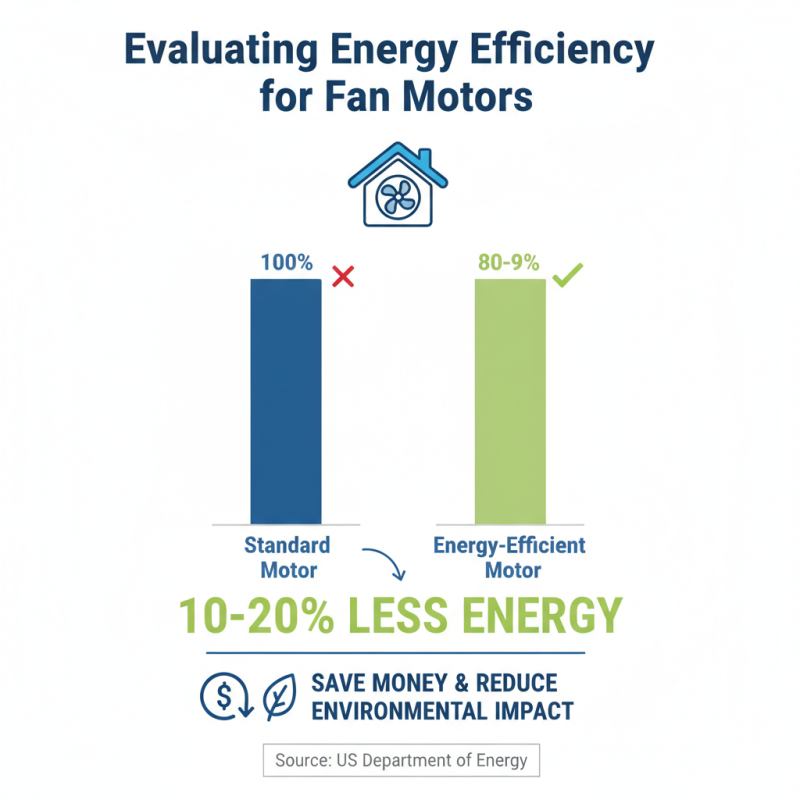
When choosing an attic fan motor, energy efficiency ratings play a crucial role. An efficient motor can lead to significant energy savings. According to the U.S. Department of Energy, energy-efficient motors typically use 10-20% less energy compared to standard models. This can add up over time, reducing electricity bills and environmental impact.
Look for motors with high Energy Star ratings. The Energy Star label signifies compliance with high efficiency standards. For example, a fan motor with a higher EER (Energy Efficiency Ratio) translates to lower electricity consumption. It's important to evaluate the motor’s wattage and airflow (measured in CFM) to ensure it meets your specific needs. Motors with a balance of low wattage and high airflow can maximize performance and reduce costs.
Tips: Always check the manufacturer's specifications. Many times, the ratings are not clearly presented. Asking for clarification can provide essential insights. Also, consider noise levels. An efficient motor should operate quietly. Take time to review different options. Avoid simply defaulting to the most popular model; it may not be the best fit for your needs.
Comparing Different Types of Attic Fan Motors
When choosing an attic fan motor, it’s essential to understand the various types available. Each type has unique features influencing airflow and energy efficiency. Traditional induction motors are reliable, but they may consume more energy compared to newer options. In contrast, brushless DC motors offer superior efficiency and quieter operation, making them an excellent choice for energy-conscious homeowners.
Tips for better airflow: Evaluate the size of your attic. Ensure the motor you choose is suitable for the space. Larger attics may require more powerful motors to maintain optimal airflow. Consider the fan's design; some blades are engineered to move more air with less effort, enhancing overall efficiency. Always assess the installation location. It affects the fan's performance significantly.
Another aspect to ponder is the noise level. Some motors generate more sound than others. If quiet operation is essential, opt for models with lower decibel ratings. Keep in mind that high-efficiency motors often come with a higher upfront cost, but they can save money in the long run. Reflect on the balance between initial investment and long-term savings when making your choice.
Installation and Maintenance Tips for Optimal Performance
Choosing the right attic fan motor can enhance airflow and efficiency. Proper installation and maintenance are crucial for achieving optimal performance.
When installing an attic fan, ensure the motor is securely mounted. A loose fixture can cause vibration, leading to noise and damage. Also, check the electrical connections for fraying or corrosion. These details matter and can affect the fan's lifespan.
Regular maintenance is essential. Clean the motor and fan blades to prevent dust buildup. This can improve airflow significantly. Inspect the fan periodically for any unusual sounds or odors. These could indicate issues that require immediate attention.
Consider using a timer or thermostat for better control. These devices can automate fan operation based on temperature or humidity levels. It's also important to reflect on how the attic space is used. Overlooking the conditions in the attic can lead to inefficiencies.



 Email
Email Whatsapp
 WeChat