Leave Your Message

China Top 10 Refrigeration Copper Fittings Manufacturers

Refrigeration Copper Fittings are small components with a demanding job: they must form dependable connections in systems exposed to pressure, vibration, and temperature changes. Their quality can affect installation time, leak risk, and long-term maintenance. Demand for cooling equipment gives this supply chain broader significance. The International Energy Agency’s 2018 report, The Future of Cooling, projected that global energy demand for space cooling could more than triple by 2050, driven partly by rising incomes and hotter conditions. This forecast concerns space cooling, not copper fittings specifically, but it shows why reliable HVAC and refrigeration components deserve careful attention.

China is a major manufacturing base for copper products, yet a supplier’s location alone does not prove product quality. Buyers should examine fitting dimensions, copper grade, pressure specifications, brazing suitability, inspection procedures, and documented quality controls. Ask for current technical sheets and verify that products match the intended system and applicable standards. Details matter. A smooth-looking fitting is not enough. This guide introduces ten Chinese manufacturers and offers practical points for comparing their product ranges, production capabilities, export experience, and customer support. The list should be treated as a research starting point, not a certified ranking: public information varies, and supplier claims may need independent verification. That limitation is worth saying plainly. When project requirements are unclear, even a reputable manufacturer may not be the right fit.
China Top 10 Refrigeration Copper Fittings Manufacturers

Refrigeration Copper Fittings: Types, Connections, and System Roles

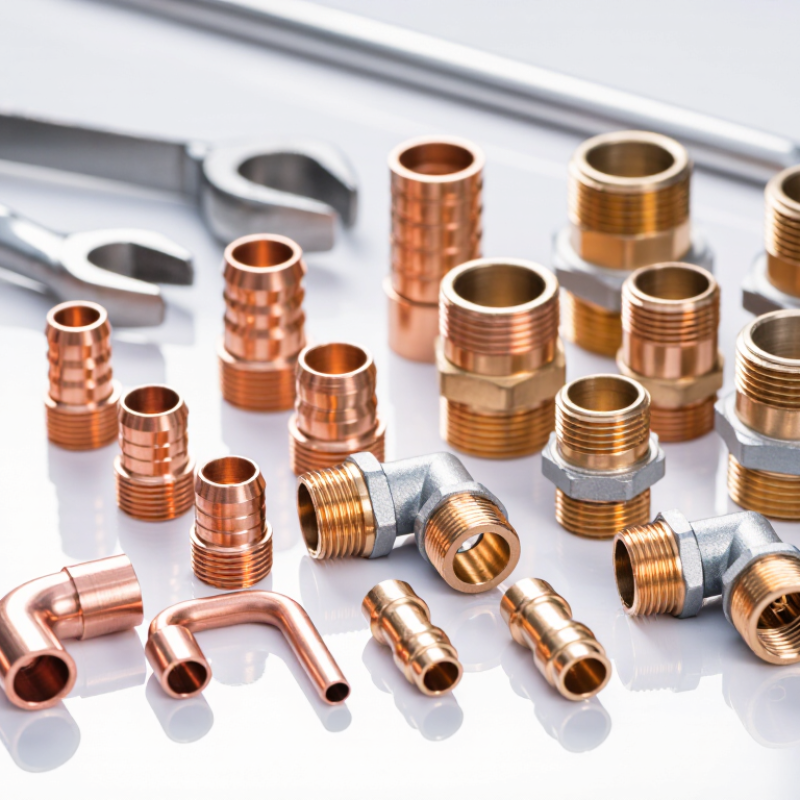
Refrigeration copper fittings guide refrigerant through bends, branches, and changes in pipe size. Elbows redirect a line around a cabinet or wall. Tees create branches, while reducers connect tubing with different diameters. Couplings join straight sections. Small parts, big consequences.

Connection choice depends on the component and system design. Many fixed copper lines use brazed joints, made with compatible filler metal and controlled heat. Nitrogen flowing through the pipe during brazing can reduce internal oxide formation. Flare connections are common at compatible service points and valves, where the joint can be opened for maintenance. They need clean, undamaged mating surfaces and careful tightening. Follow the equipment maker’s specifications; a connection that looks secure may still leak. Details matter.

Fittings also affect flow, oil return, vibration, and service access. An unnecessary bend can add resistance, while a poorly supported branch may transmit vibration to a joint. Correct sizing matters, but the shortest route is not always the easiest one to inspect or repair. A drawing can look tidy while the installed piping leaves little room for a wrench. That trade-off deserves a second look. After assembly, technicians typically pressure-test and evacuate the circuit according to the system’s requirements before charging it.


Material Benchmark: Copper Conductivity of About 398 W/(m·K) at 20°C

China Top 10 Refrigeration Copper Fittings Manufacturers

Material Benchmark: Copper Conductivity of About 398 W/(m·K) at 20°C

For refrigeration fittings, copper’s thermal conductivity is a useful material benchmark. At 20°C, a value of about 398 W/(m·K) is commonly cited for copper. It helps explain how readily heat moves through the material. In practice, this matters around joints and piping where temperature changes can affect system operation. The figure is a reference, not a guaranteed value for every fitting.

Actual performance depends on copper grade, composition, geometry, and manufacturing quality. A fitting’s wall thickness and internal surface also influence heat transfer. Conductivity alone cannot show whether a component will withstand pressure or form a reliable joint. Buyers comparing manufacturers should review material documentation, dimensional consistency, and inspection methods. Small flaws matter. I would not rank a supplier by conductivity figures alone; that is an easy benchmark to overvalue.

Quality Checks: ASTM B280 Tube Compatibility, Dimensions, and Pressure Testing

For refrigeration copper fittings, compatibility starts with the tube’s actual outside diameter, not a plumbing-size assumption. ASTM B280 covers ACR copper tube from 1/8 to 4-1/8 inches in outside diameter. The Copper Development Association’s Copper Tube Handbook provides dimensional tables that help verify tube size and wall thickness. A 3/8-inch ACR tube, for example, measures 0.375 inch across its outside diameter. Check that measurement with a caliper before selecting a fitting. Close is not enough. Also inspect roundness, cut ends, burrs, and visible dents; each can interfere with a tight joint.

Pressure checks need equal care. Confirm the fitting’s rated pressure and the system’s specified test pressure against the equipment documentation and applicable engineering requirements. Do not apply one test value to every assembly. A controlled test with a calibrated gauge can reveal leaks at brazed joints and connection points; record the pressure, hold time, and any drop. ASHRAE’s Refrigeration Handbook offers technical guidance on refrigeration-system practice, but project requirements still matter. One awkward detail: a clean-looking joint can still leak. That is why visual inspection alone is weak evidence. Recheck dimensions and test records before accepting a batch, especially when fittings come from different production lots.

China Top 10 Refrigeration Copper Fittings Manufacturers - Quality Checks: ASTM B280 Tube Compatibility, Dimensions, and Pressure Testing

Quality check What to verify Acceptance basis Useful evidence
1. Tube material compatibility Confirm the fitting is intended for the specified copper tube material, temper, and refrigeration or air-conditioning service. ASTM B280 covers seamless copper tube for air-conditioning and refrigeration field service. Confirm the tube and fitting connection requirements against the applicable product standards and design. Material certificates, product specification, and tube/fitting compatibility statement.
2. Tube outside-diameter match Check that the fitting connection is designed for the tube’s nominal outside diameter (OD), not merely a similar nominal size. Compare actual tube OD and fitting connection dimensions with the applicable drawing and standard. Common ACR tube OD examples include 1/4, 3/8, 1/2, 5/8, 3/4, 7/8, and 1-1/8 in; confirm the size range and edition required. Calibrated micrometer readings, inspection records, and dimensioned drawings.
3. Fitting-standard applicability Identify the connection type, such as a solder-joint fitting, and verify the corresponding fitting standard applies. ASME B16.22 covers wrought copper and wrought copper-alloy solder-joint pressure fittings. Other connection types may require different standards; do not assume B16.22 covers every refrigeration fitting. Declared standard and edition, drawings, and conformity documentation.
4. Critical dimensions Measure connection OD or socket dimensions, insertion depth, overall length, branch geometry, and end alignment as applicable. Dimensions and tolerances must meet the specified drawing and applicable fitting standard; tolerances vary by fitting type and size, so use the controlled specification rather than a universal tolerance. First-article inspection report and calibrated gauges or measuring instruments.
5. Wall and socket condition Inspect the fitting body and connection area for incomplete forming, excessive thinning, cracks, dents, or obstructed passages. Conform to the approved design and product specification; reject visible defects that could impair fit, pressure integrity, or flow. Visual inspection records and, where specified, wall-thickness measurements.
6. Surface and cleanliness Check for harmful scale, oil, moisture, loose particles, corrosion, and damage to joining surfaces or threads. Meet the purchaser’s cleanliness and packaging requirements and keep internal surfaces suitable for the intended refrigeration system. Visual inspection, cleanliness procedure, and packaging inspection.
7. Joint preparation and fit Verify tube insertion and joint fit are suitable for the specified joining method, including brazing or soldering where applicable. Follow the fitting and system design requirements and the qualified joining procedure. A visually acceptable dry fit alone does not establish a leak-tight joint. Assembly trial records and approved joining procedure.
8. Pressure rating and service conditions Check the fitting’s declared pressure and temperature limits against the refrigerant, operating conditions, and system design. Use the applicable product rating and system code or specification. The allowable system pressure is limited by the lowest-rated component; do not infer a pressure rating from material alone. Published rating, design documentation, and material traceability.
9. Pressure and leak testing Confirm whether the product or assembled system is tested, the test medium, test pressure, duration, and leak-detection method. Set test conditions under the applicable code, approved procedure, and component limits. There is no single universal test pressure for all copper fittings or refrigeration systems. Use safe, controlled procedures, especially for pneumatic testing. Test report identifying sample or lot, calibrated instruments, conditions, results, and acceptance criteria.
10. Traceability and lot control Confirm production lots can be linked to material records, inspection results, and any pressure or leak-test records required by the purchase specification. Records should be complete, consistent, and retrievable for the specified retention period. Lot codes, inspection plans, certificates, and nonconformance records.

Reference note: ASTM B280 specifies refrigeration and air-conditioning copper tube; it does not by itself establish every fitting’s dimensions, pressure rating, or test pressure. Verify the current standards, drawings, and project requirements for the specific product.

China’s Top 10 Manufacturers: Product Range, Certifications, and Production Strengths

Comparing China’s refrigeration copper fittings manufacturers requires more than counting catalog pages. A useful product range may include elbows, tees, reducers, couplings, flare fittings, and adapters for different tube sizes. Check dimensions, connection types, copper grade, and stated pressure ratings against the system design. Small details matter. A fitting that looks suitable may still require a different joining method or installation clearance.

Certifications can help assess quality systems and product claims, but their scope deserves close review. Confirm the issuing body, validity period, covered facility, and applicable product category. Ask for material certificates, inspection records, and sample test reports where relevant. Requirements vary by destination and application. A certificate alone does not prove every production batch meets the same specification.

Production strength is best judged through repeatable evidence: machining capability, dimensional controls, leak testing, and stable lead times. Some suppliers also provide batch traceability and custom drawings. Request recent inspection data and clarify how defects are handled. Factory descriptions can sound polished; the less glamorous records often tell more. I would also compare sample quality with routine output, because one good sample is not a production system.

How to Compare Suppliers by Standards, Capacity, Export Reach, and Technical Support

Choosing a refrigeration copper fitting supplier requires more than comparing unit prices. Check whether products meet relevant specifications, such as ASTM B16.22 for wrought solder-joint fittings or EN 1254-1 for copper capillary fittings. Request material certificates, dimensional inspection records, and pressure-temperature ratings for the exact fitting family. Standards matter at the joint, not just on the brochure.

Demand is growing. UNEP’s 2023 Global Cooling Watch report estimates that cooling demand could more than triple by 2050 under a business-as-usual scenario. That makes production capacity worth checking, but a quoted monthly output is not proof. Ask about recent lead times, batch traceability, and shipments to your destination market. Inspect sample packaging too; exposed tube ends can collect dirt or suffer damage. A neat catalog can still mislead.

Compare export reach through delivery records, packing specifications, and the supplier’s ability to prepare consistent technical documents. Then test support with a specific question about tube compatibility or brazing guidance. Measure response time and whether the answer includes drawings or test evidence. I would not judge support by one polished sales call. A test sample helps. Even experienced buyers can overlook small dimensional differences, so verify critical sizes before approving a large order.