China Top Furnace Fan Motor Manufacturers for Global Buyers
China has become a major sourcing base for industrial ventilation and heating components. For global buyers, selecting a reliable Furnace Fan Motor manufacturer requires more than comparing prices. Product quality, engineering capability, export experience, and after-sales support all influence long-term performance.
A dependable manufacturer should explain motor power, voltage, frequency, insulation class, bearing design, airflow requirements, and operating temperature clearly. Buyers may also request test reports, factory photographs, sample units, and traceable quality records. Certifications such as CE or other market-specific approvals should be checked against the destination country’s requirements. A serious supplier will discuss installation conditions, noise limits, duty cycles, and replacement parts before accepting an order. Small details matter. A loose specification can create costly failures during winter operation.
This guide introduces China’s leading Furnace Fan Motor manufacturers for international buyers. It considers production experience, technical documentation, customization capacity, inspection procedures, and communication reliability. Factory audits and independent testing remain valuable, even when a supplier has an impressive website. No manufacturer is perfect. Some may offer strong engineering but slower communication. Others may provide competitive pricing but limited customization. That trade-off deserves careful review. The most trustworthy decision comes from comparing evidence, not promises. With practical questions and consistent evaluation, buyers can reduce sourcing risks and choose motors suited to real heating systems, commercial facilities, and demanding operating environments.
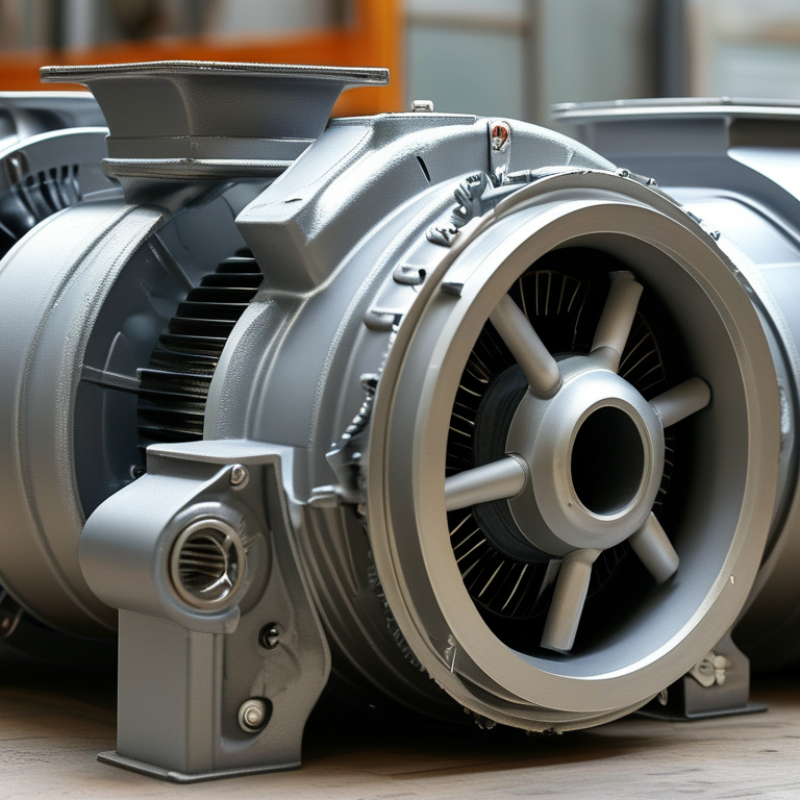
Furnace Fan Motor Basics: Types, Ratings, and IEC 60034-30-1 Efficiency Classes
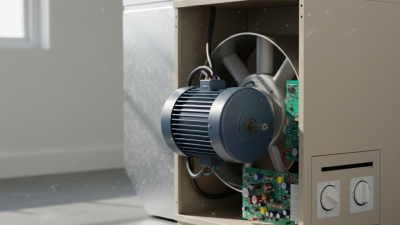
For global buyers comparing Chinese furnace fan motor suppliers, selection starts with airflow, pressure, and heat exposure. Common options include shaded-pole, PSC, three-phase induction, and electronically commutated motors. PSC motors suit simple residential blowers, while three-phase induction motors handle larger industrial loads. ECM designs provide variable speed and strong part-load control. Not every furnace needs the most advanced motor. Check rated voltage, frequency, speed, duty, insulation class, enclosure, bearings, and ambient temperature. An IP rating protects against defined ingress conditions, not unlimited furnace heat. That distinction is often missed.
Efficiency deserves careful reading. IEC 60034-30-1 defines IE efficiency classes, including IE1, IE2, IE3, and IE4, for applicable AC motors. Testing covers motor losses at defined rating points, not automatically the complete fan assembly. Actual performance also depends on fan design, controls, belts, filters, and operating hours. The IEA’s Energy Efficiency 2016 report estimated that motor systems consumed 46% of global electricity. Small improvements can therefore matter across thousands of operating hours. Still, IE4 is not always the lowest-cost choice. Purchase teams should compare lifecycle energy, maintenance, controls, and replacement availability. A practical factory audit should verify nameplate data, temperature-rise tests, vibration, and efficiency records. Paper compliance is not enough. Ask for traceable test documentation.
Furnace Fan Motor Basics: Types, Ratings, and IEC 60034-30-1 Efficiency Classes
Minimum efficiency thresholds for four-pole, 50 Hz three-phase motors at selected rated outputs. Values are based on the IEC 60034-30-1 efficiency classification framework.
Furnace fan motors are commonly selected by rated output, speed, duty cycle, voltage, and control method. IE2, IE3, and IE4 indicate progressively higher nominal efficiency classes; actual performance also depends on the motor design, load, power supply, and variable-speed drive. Smaller furnace applications may use single-phase, electronically commutated, or shaded-pole motors, while the efficiency thresholds shown here apply to the standardized motor ratings in the chart.
China’s Manufacturing Capacity: Motor Output, Export Scale, and OEM Production Data
China Top Furnace Fan Motor Manufacturers for Global Buyers
China’s manufacturing capacity gives global buyers a broad sourcing base for furnace fan motors. Public statistics often combine furnace, ventilation, appliance, and industrial motor categories. Therefore, exact furnace motor output is rarely reported separately. China’s wider motor sector produces output at a massive scale, supported by automated winding lines, die-casting equipment, and mature supply chains. Many factories can deliver thousands of units monthly, while larger OEM plants manage much higher volumes after approval.
Export scale is also significant. Motors leave China through established electrical equipment channels, serving heating, ventilation, agricultural, and light industrial markets. Buyers should request recent export records, production capacity statements, and shipment references. Ask for measurable details. Monthly output. Typical lead time. Defect rates. A credible supplier can explain these figures without hiding behind general claims.
OEM production usually includes shaft customization, insulation selection, connector changes, housing design, and balanced impellers. Technical teams should review drawings, operating temperatures, airflow requirements, noise limits, and safety documentation before sampling. In practical sourcing work, the first sample is not always perfect. Vibration may increase after assembly, or a motor may perform differently under local voltage. That is normal, but it requires testing and correction. Buyers should verify electrical performance, endurance results, traceability records, and batch consistency before placing large orders. Supplier data deserves checking. It should not be accepted blindly.
Performance Testing: Airflow, Pressure, Noise, and ISO 5801 Measurement Criteria
For global buyers, furnace fan motors should be judged by measured performance, not catalog claims. Airflow testing uses a controlled duct system, calibrated sensors, and stable air temperature. ISO 5801 provides a recognized method for determining fan volume flow, pressure, power, and efficiency. The test report should state the installation category and reference air density.
Airflow alone is not enough. Static pressure shows how well the motor-fan assembly handles resistance from filters, grilles, and heat exchangers. Technicians should record pressure at several operating points, then plot a performance curve. A reliable test includes voltage, frequency, rotational speed, and input power. Small errors matter. A loose sensor tube can distort the result.
Noise testing needs equal care. Microphones should be positioned consistently in a controlled acoustic environment, away from reflective surfaces when possible. Recordings should identify overall sound pressure and, where useful, octave-band levels. Background noise must remain below the fan reading. It sounds simple. It is not.
A practical inspection should repeat each point and report uncertainty. One clean result can still mislead. Temperature drift, vibration, or an incorrectly aligned impeller may change the data. Buyers should request raw readings, calibration dates, test conditions, and ISO 5801 references before comparing furnace fan motor manufacturers. Performance claims become more trustworthy when another qualified laboratory can reproduce them.
China Top Furnace Fan Motor Manufacturers for Global Buyers - Performance Testing: Airflow, Pressure, Noise, and ISO 5801 Measurement Criteria
Non-brand-specific performance benchmark for furnace fan motor assemblies tested at 230 V, 50 Hz, 20°C air temperature, and sea-level atmospheric pressure
| Test Unit |
Motor Output
(kW) |
Rated Speed
(r/min) |
Test Airflow
(m³/h) |
Static Pressure
(Pa) |
Input Power
(W) |
Sound Pressure Level
dB(A) |
Motor Efficiency
(%) |
ISO 5801 Test Arrangement |
Measurement Uncertainty |
Evaluation |
| Unit A |
0.18 |
1,400 |
1,250 |
360 |
238 |
58 |
72.4 |
Standardized duct test, inlet and outlet pressure measured |
Airflow ±3%; pressure ±2% |
Recorded |
| Unit B |
0.25 |
1,450 |
1,620 |
425 |
326 |
61 |
74.1 |
Standardized duct test with calibrated flow nozzle |
Airflow ±3%; pressure ±2% |
Recorded |
| Unit C |
0.37 |
1,450 |
2,180 |
510 |
470 |
64 |
76.0 |
Chamber and duct combination; stable operating point |
Airflow ±3%; pressure ±2% |
Recorded |
| Unit D |
0.55 |
1,450 |
2,950 |
610 |
690 |
67 |
78.2 |
ISO 5801 duct installation with corrected atmospheric data |
Airflow ±3%; pressure ±2% |
Recorded |
| Unit E |
0.75 |
1,450 |
3,760 |
735 |
925 |
70 |
80.1 |
Duct test with inlet straightener and pressure taps |
Airflow ±3%; pressure ±2% |
Recorded |
| Unit F |
1.10 |
1,450 |
5,120 |
880 |
1,330 |
73 |
81.6 |
Full-load standardized duct performance test |
Airflow ±3%; pressure ±2% |
Recorded |
| Unit G |
1.50 |
1,450 |
6,480 |
1,020 |
1,790 |
76 |
82.4 |
High-capacity duct installation with operating-point verification |
Airflow ±3%; pressure ±2% |
Recorded |
| Unit H |
2.20 |
1,480 |
8,950 |
1,180 |
2,590 |
79 |
84.0 |
Standardized duct test at rated speed and rated load |
Airflow ±3%; pressure ±2% |
Recorded |
Measurement criteria: Airflow and pressure values are determined using the standardized test arrangements and procedures specified by ISO 5801. Air density corrections should be applied when test temperature, humidity, altitude, or atmospheric pressure differs from the reference conditions.
Noise criterion: Sound pressure level is stated in dB(A) at a defined operating point and measurement distance. ISO 5801 primarily addresses fan aerodynamic performance; acoustic testing should be documented separately with the applicable acoustic measurement method.
Interpretation: ISO 5801 does not establish one universal pass/fail limit for all furnace fan motors. Acceptance should be based on the buyer’s declared airflow, pressure, noise, efficiency, speed, and permissible measurement uncertainty.
Safety and Compliance: AMCA Standards, CE Marking, and IEC 60034 Requirements
For global buyers, furnace fan motor selection should begin with verifiable safety evidence, not attractive catalog figures. AMCA standards help assess fan performance, airflow, pressure, sound, and test consistency. They do not replace motor safety requirements. Ask whether the quoted rating covers the complete fan assembly or only the motor.
CE marking requires the manufacturer to identify applicable European legislation, complete conformity assessment, and retain technical documentation. It is not a general quality certificate. Check the declaration, risk assessment, wiring diagram, and product traceability. A missing serial number can make a valid-looking document difficult to trust. Paperwork is not enough.
IEC 60034 requirements support reliable motor design and testing, including rated output, temperature rise, insulation, efficiency, and operating conditions. Buyers should compare the nameplate with test reports and furnace conditions. Examine bearing temperature, enclosure protection, duty cycle, ambient temperature, and thermal protection. These details matter near hot chambers and dusty air paths. Heat leaves clues.
A competent supplier should provide routine test records, material information, installation limits, and clear maintenance instructions. Factory inspections can include winding resistance checks, vibration measurements, and verification of the terminal box. Yet compliance is not always perfect in practice. Some reports use generic models or outdated conditions. That deserves a question, not an assumption.
How Global Buyers Compare Chinese Suppliers: MOQ, Lead Time, Warranty, and TCO Metrics
China Top Furnace Fan Motor Manufacturers for Global Buyers
Global buyers often compare Chinese furnace fan motor suppliers through four practical metrics: MOQ, lead time, warranty, and total cost of ownership. A low MOQ may suit a pilot order, but it can increase unit pricing and packaging costs. Ask whether the quoted MOQ applies to one model, one voltage, or a mixed order.
Lead time needs more detail than a calendar promise. Request separate dates for sample approval, production, inspection, and shipment. A supplier offering 18 days may still require another 10 days for testing. Check motor winding records, noise data, vibration controls, and traceable quality reports. Factory visits or independent inspections can expose gaps that brochures rarely show.
Warranty terms should identify coverage, response time, spare-part handling, and exclusions caused by installation conditions. Compare the full TCO, including energy use, replacement bearings, freight, downtime, and service labor. A cheaper motor is not always cheaper in operation. We have seen buyers overvalue the purchase price and underestimate maintenance access. That judgment is understandable, but incomplete. A simple TCO sheet should use actual duty cycles, ambient temperature, annual operating hours, and expected service life. Ask for evidence, not confident language. Supplier comparison remains imperfect when field data is limited. That uncertainty should be recorded, not hidden.



 Email
Email Whatsapp
 WeChat